
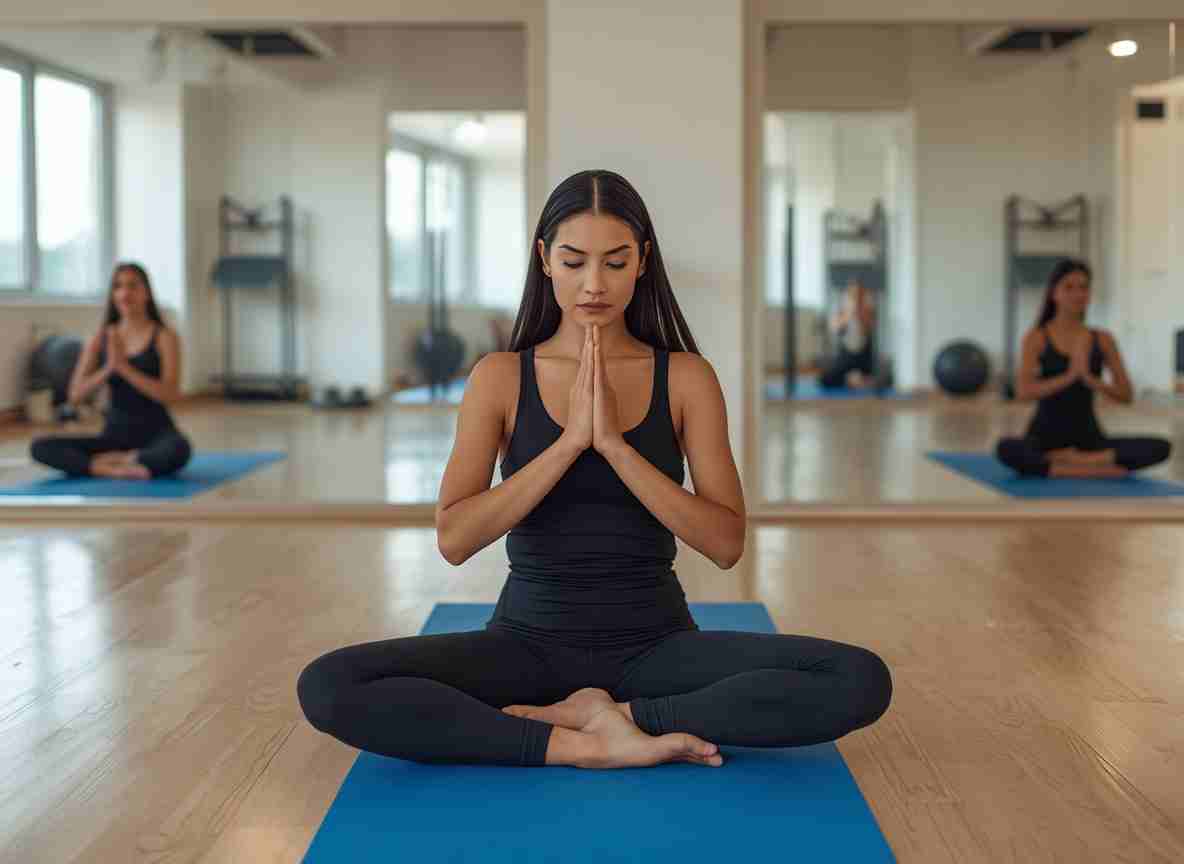
Yoga Mat Pilates in Rawalpindi | Wellness Club Zone 2026
You've decided to do something about the back stiffness, the stress, or the postnatal recovery. Someone mentions yoga. Someone else says mat Pilates. Both involve a mat, an instructor, and controlled movement. Beyond that, most advice online is vague enough to be useless.
This guide makes the decision simple. It explains what yoga mat pilates actually means, how yoga and mat Pilates differ in practice, which one fits which goal, and what to expect from classes in Rawalpindi in 2026. If you're considering Wellness Club Zone in Bahria Town Phase 7, it also covers exactly what's on offer and who each program is built for.
You will not need to open another tab after this.
What Is Yoga Mat Pilates? Clearing Up the Confusion
Most people searching for yoga mat pilates are not looking for a single hybrid class. They're comparing two options and using one search to find both. That's an important distinction because yoga and mat Pilates are related in equipment and setting but different in method, origin, and what they do to your body.
Yoga is a practice originating in ancient India, documented in texts including the Yoga Sutras of Patanjali, that links breath, movement, and mental focus. A yoga class builds flexibility, balance, and a measurable reduction in stress through postures held for varying durations. The physical practice is one layer of a broader system that also includes breathwork (pranayama) and meditation.
Mat Pilates is a movement method developed by Joseph Pilates in the early twentieth century, originally named Contrology. It uses bodyweight exercises performed on a mat to build deep core stability, improve postural alignment, and develop controlled muscle strength. No machines are involved. The focus is precision and breath coordination, not cardiovascular output.
Same mat. Completely different training systems.
The overlap is real. Both use a mat, both require no machines for entry-level work, and both improve flexibility and body awareness over time. But the mechanism is different. Yoga achieves flexibility through sustained stretching and holds. Mat Pilates builds stability through controlled resistance and neuromuscular activation. Depending on your goal, one will outperform the other significantly.
When the Distinction Actually Matters
For general wellness, trying both is a sensible approach, and many studios in Rawalpindi now offer both under one roof, including Wellness Club Zone. Where the distinction becomes critical is in specific recovery or rehabilitation scenarios. Post-pregnancy abdominal recovery, chronic lower back issues, and scoliosis management all respond differently to yoga versus mat Pilates, and choosing wrong wastes months of effort.
Yoga vs Mat Pilates: Which One Fits Your Goal?
Rather than listing differences in the abstract, here's how each method performs against the goals that bring most people in Rawalpindi into a studio in the first place.
For core strength, mat Pilates is the clearer winner. Every session directly targets the deep stabilizing muscles. Yoga engages the core in balance poses, but it's incidental rather than the central focus.
For flexibility, yoga wins. Sustained stretching in held postures builds range of motion more effectively than mat Pilates, which improves flexibility as a byproduct of functional movement rather than as a primary goal.
For stress reduction, yoga wins by a significant margin. Breathwork and meditation are built into the practice. Mat Pilates requires focus and controlled breathing, which helps, but it doesn't deliver the parasympathetic activation that a structured yoga session does.
For posture correction, mat Pilates is the stronger choice. Spinal alignment and postural awareness are central to the method, not incidental to it.
For post-pregnancy recovery, mat Pilates is generally recommended over yoga. It offers a safer, more progressive approach to rebuilding abdominal integrity after pregnancy, particularly for women dealing with diastasis recti.
For back pain management, mat Pilates addresses the root cause more directly by building the spinal stability that reduces compressive load on the lumbar spine. Yoga can help with mild back pain, but carries more risk if postures are held incorrectly.
For mental wellbeing, yoga is measurably more effective. A 2023 meta-analysis published in the Journal of Psychiatric Research, reviewing 19 randomized controlled trials, found that yoga-based interventions produced statistically significant reductions in perceived stress and anxiety, comparable in some populations to moderate aerobic exercise.
The clearest takeaway: if your primary goal is physical rehabilitation, posture improvement, or core rebuilding after pregnancy, mat Pilates is the more targeted choice. If stress management, flexibility, or a mind-body practice is the priority, yoga delivers that more directly. Neither is superior across every scenario. Studios that claim otherwise are marketing, not advising.
The Hybrid Approach: Why Many Rawalpindi Clients Do Both
A common pattern among clients at structured wellness studios is that those who combine mat Pilates for core and structural work with yoga for stress and flexibility see faster, more well-rounded results than those who commit to one method exclusively. At Wellness Club Zone, both programs run under the same roof, which makes this combination practical without requiring two memberships.
Mat Pilates Classes in Rawalpindi: What Actually Happens in a Session
Mat Pilates is one of the most misunderstood formats in Pakistan's growing fitness studio market. Many people expect it to feel like light stretching. The first session usually corrects that assumption.
A standard mat Pilates class at Wellness Club Zone runs through a sequence built on Joseph Pilates' original 34-exercise framework, adapted for different fitness levels by certified instructors. Sessions typically begin with a breathing and neutral spine setup, move through core activation exercises like the Hundred, Single Leg Circles, and Rolling Like a Ball, then progress into hip strengthening, spinal articulation, and full-body control work.
What to Expect in Your First Mat Pilates Class
First comes breath and neutral spine orientation. The instructor explains how to breathe into the ribcage laterally rather than into the belly, and helps you find your neutral lumbar position. This takes five to ten minutes in the first session and is worth every second because everything that follows depends on it.
Then comes core activation before movement. You will feel muscles engage that haven't been deliberately activated in years. This is normal and expected, not a sign that something is wrong.
The pace will likely be slower than you expect. Mat Pilates is controlled, not fast. The challenge is precision, not speed or repetitions. If you're used to gym training, this adjustment takes a few sessions.
Expect some delayed muscle soreness after the first two classes. Deep stabilizers are rarely worked in conventional gym training. Mild soreness in the lateral hip, lower abdominals, and inner thighs is common. It passes quickly and is not a reason to skip the next session.
Modifications will be offered throughout. Instructors at Wellness Club Zone assess your level and adjust exercises accordingly. No prior fitness experience is required to attend, and no one is expected to execute advanced variations in the first month.
Most members report feeling noticeably taller after the first few sessions. That's postural awareness taking effect, not an illusion. The deep spinal stabilizers activating during mat Pilates directly affect how you hold your body between classes.
Who Is Mat Pilates For in Rawalpindi?
Mat Pilates suits four specific groups particularly well. People managing chronic lower back pain benefit because core stability work directly reduces compressive load on the lumbar spine. Postpartum women rebuilding abdominal integrity find mat Pilates to be one of the safest structured methods available, particularly for diastasis recti recovery. Desk workers in Rawalpindi's growing corporate and tech sectors, who experience cervical and upper back tension from extended sitting, respond very well within the first four to six weeks. And older adults looking to maintain functional mobility without high-impact exercise get a consistent, safe training system that doesn't ask the joints to do things they can't sustain.
Yoga Classes in Rawalpindi: What the Practice Actually Delivers
Yoga's reputation in Pakistan has shifted noticeably in recent years. By 2026, Google Trends data for Pakistan shows consistent year-on-year growth in yoga-related searches, with Rawalpindi and Islamabad driving a significant share of that volume. Demand has moved from awareness to active enrollment.
At Wellness Club Zone, yoga classes cover two primary styles: Hatha Yoga and Vinyasa Flow. These are not interchangeable, and the difference matters when you're choosing a class.
Hatha Yoga is slow-paced, with postures held for several breaths. The primary benefits are flexibility, stress reduction, and foundational alignment. It's the better starting point for beginners, anyone in stress recovery, and older adults who want the benefits of yoga without a dynamic pace.
Vinyasa Flow links postures through breath at a moderate to dynamic pace. It delivers more cardiovascular conditioning, full-body strengthening, and mental focus under movement. It suits people with some base fitness who also want weight management support alongside the traditional yoga benefits.
In the context of Rawalpindi's lifestyle, where extended commutes, domestic responsibilities, and high-density living contribute to chronic low-grade stress, the breathwork and parasympathetic activation built into yoga sessions provide measurable benefit beyond what general fitness exercise delivers.
Reformer Pilates vs Mat Pilates: The Upgrade Question
Reformer Pilates is the machine-based version of the Pilates method. It uses a sliding carriage with spring resistance to add variable load to the same exercises performed on the mat. Wellness Club Zone is one of the few studios in Rawalpindi offering both reformer and mat Pilates under one roof, which is a distinction worth understanding before you choose.
Mat Pilates relies on bodyweight alone. Reformer Pilates uses spring tension to either assist or resist movement, which makes it possible to work at much finer levels of load adjustment. For beginners with injury history or very low baseline strength, the reformer can actually make certain exercises easier by providing support. For advanced practitioners, it provides significantly greater resistance than bodyweight allows.
Mat Pilates is not the inferior version. It's a different tool with different applications.
The honest recommendation for a Rawalpindi beginner: start with mat Pilates to build body awareness and understand the fundamental movement principles. Once you can execute the core exercises with control and without compensation patterns, reformer sessions become significantly more productive because you know what you're trying to achieve. Jumping to reformer without that foundation is one of the most common and expensive mistakes beginners make.
Yoga Classes Near Me in Rawalpindi: What to Actually Look For
Searching for yoga classes near me in Rawalpindi returns a mixed list. Studio quality, instructor credentials, and class structure vary enormously. Before you book, these are the factors that actually determine your experience.
Instructor certification matters more than most people check. In Pakistan, relevant certifications include Yoga Alliance RYT-200 at entry level and RYT-500 for advanced yoga instructors. For Pilates, STOTT Pilates, BASI Pilates, and Body Control Pilates are internationally recognized. Wellness Club Zone's instructors hold verifiable certifications. Ask to see them if you're comparing studios. A reluctance to share this information is its own answer.
Class size directly affects how useful the session is. Smaller groups mean more individual attention. For beginners especially, a class of six to eight is meaningfully better than a class of twenty where the instructor cannot monitor your alignment. Ask about average attendance before you commit to a package.
Gender-separated or co-ed options are worth confirming. Wellness Club Zone operates with awareness of the preference among many women in Rawalpindi for women-only sessions. Contact the studio directly for current scheduling, as availability can change seasonally.
Location practicality is easy to underestimate when you're enthusiastic at the point of signing up. Bahria Town Phase 7 is accessible from Rawalpindi's main commercial areas. Factor your actual commute into your commitment assessment. A studio you won't consistently reach is not the right studio regardless of quality.
Trial access tells you more than any website can. Wellness Club Zone offers a free trial class. Use it. No assessment of a studio is accurate from a homepage alone.
One gap most studio listings skip entirely: ask about instructor turnover. High turnover in a small studio breaks the continuity that makes structured programs like Pilates work over twelve weeks. Consistent instruction from someone who knows your body's patterns is genuinely more valuable than facility aesthetics.
Pricing and What a Class Actually Costs in Rawalpindi in 2026
Wellness Club Zone's pricing structure covers individual sessions and package bundles. Verify current rates directly at wellnessclubzone.com/pricing before committing, as pricing is subject to change.
For context on the broader Rawalpindi market: structured Pilates and yoga classes in Bahria Town typically range between PKR 3,000 and PKR 8,000 per month for group class packages in 2026, with private or semi-private sessions priced higher. Reformer sessions carry a premium over mat classes due to equipment maintenance costs.
Price per session is the wrong metric. The more useful calculation is results per rupee over three months. A cheaper studio with poor instruction that leads to injury, zero progress, or abandonment after three weeks costs significantly more in the long run than a moderately priced studio where you actually attend consistently and see change.
The commitment reality in Rawalpindi: most people who start yoga or mat Pilates drop out within the first four weeks. The studios that retain clients longest are not necessarily the cheapest. They're the ones where the instructor knows your name and your specific limitations by week two.
Functional Strength Training: The Missing Layer
One thing most yoga and Pilates studios in Rawalpindi don't offer alongside their mat-based classes is functional strength work. Wellness Club Zone does. This is worth understanding because mat Pilates and yoga address mobility, core stability, and stress. What they don't address well is load-bearing strength that protects bone density and builds the kind of muscular capacity needed for daily physical demands.
Functional Strength Training at Wellness Club Zone uses bodyweight and light resistance to build practical strength. Not aesthetic bulk, but the ability to carry, lift, stand for extended periods, and recover from the muscular demands of an active household or desk-heavy workday.
For anyone over forty, this addition matters clinically. The International Osteoporosis Foundation recommends regular weight-bearing exercise as a primary strategy for maintaining bone density. A program that combines yoga or mat Pilates with structured strength work provides a more complete physical foundation than either format alone.
The Decision Made Simple
If you've been going back and forth between yoga and mat pilates, here's the clear answer: your primary goal determines the starting point. Back pain, post-pregnancy recovery, or posture correction means starting with mat Pilates at Wellness Club Zone. Stress, flexibility, or a mind-body practice means starting with yoga. If long-term physical wellbeing is the actual goal, both programs running concurrently will get you there faster than either alone.
Wellness Club Zone in Bahria Town Phase 7, Rawalpindi offers certified instruction in both formats, plus reformer Pilates and functional training if you want to extend the work beyond the mat. A free trial class is available. Book it before you decide because no amount of reading substitutes for one session with a good instructor.
The best class is the one you actually attend consistently. Start there.
Frequently Asked Questions
1. What is the difference between yoga and mat Pilates? Yoga is a practice that uses postures, breathing, and meditation to build flexibility, balance, and mental calm. Mat Pilates is a bodyweight exercise method focused on deep core stability, postural alignment, and controlled muscle strengthening. Both use a mat and require no machines, but they work the body differently. Yoga prioritizes range of motion and mental focus. Mat Pilates prioritizes structural stability and neuromuscular control. Most people benefit from practicing both.
2. Is mat Pilates good for beginners with no fitness background? Yes. Mat Pilates is one of the most beginner-accessible structured fitness formats available. Sessions start with fundamental movement patterns and breath coordination, and experienced instructors modify every exercise to match the individual's current ability. No prior fitness background is required. Most beginners notice improved posture awareness and core engagement within two to three weeks of consistent classes.
3. Can yoga help with lower back pain in Rawalpindi? Yoga can help with mild lower back pain when practiced under a qualified instructor who understands spinal mechanics. However, for moderate to significant back pain or post-injury recovery, mat Pilates is generally the safer and more targeted starting point. Deep core stabilization work directly reduces compressive load on the lumbar spine. If you have an existing back condition, consult a physiotherapist before starting any class.
4. How many sessions per week are recommended for mat Pilates results? Two to three sessions per week is the standard recommendation for visible progress within the first six to eight weeks. One session per week maintains awareness but rarely produces structural change. Joseph Pilates himself recommended daily practice for foundational students. For most people in Rawalpindi managing busy schedules, two consistent weekly sessions plus an occasional third when possible is a realistic and effective target.
5. What is reformer Pilates and how is it different from mat Pilates? Reformer Pilates uses a spring-resistance machine called a reformer to perform Pilates exercises with adjustable load. Mat Pilates uses bodyweight only on a floor mat. The reformer adds variable resistance that can assist or challenge movement, making it useful for both rehabilitation and advanced strength work. Mat Pilates is typically the recommended starting point so students understand the movement principles before adding machine variables.
6. Are yoga classes at Wellness Club Zone suitable for women only? Wellness Club Zone is designed with privacy and comfort as a priority and offers scheduling that accommodates women's preferences. For current gender-separated class availability and timings, contact the studio directly at 0309 0780850 or visit wellnessclubzone.com. Class schedules and formats can change, and the most accurate information is always directly from the studio.
7. Is mat Pilates effective for post-pregnancy recovery? Yes. Mat Pilates is one of the most recommended structured exercise methods for postpartum recovery, particularly for rebuilding the deep abdominal muscles after pregnancy. It addresses diastasis recti, which is abdominal separation, through targeted transverse abdominis activation that most general gym exercises do not reach. A qualified instructor will assess readiness for specific exercises and progress the program appropriately. Medical clearance from your doctor before starting postpartum exercise is always recommended.
8. How do I find yoga classes near me in Rawalpindi? For structured, instructor-led yoga classes in Rawalpindi, Wellness Club Zone in Bahria Town Phase 7 offers Hatha and Vinyasa yoga sessions with certified instructors. You can book a free trial class at wellnessclubzone.com/book-now before committing to a package. When comparing studios, ask about instructor certifications, class sizes, and whether a trial is available. Visiting before committing is always worthwhile.
9. Can I do yoga and mat Pilates in the same week? Yes, and for most people this combination is more effective than doing either exclusively. Yoga covers flexibility, stress reduction, and mental focus. Mat Pilates covers core stability, postural alignment, and controlled strength. The two methods complement each other without creating recovery conflicts because they work different physiological systems. Many clients at structured studios alternate between both formats across a weekly schedule.
10. What should I wear to a mat Pilates or yoga class in Rawalpindi? Fitted, stretchy clothing that doesn't restrict movement is appropriate for both yoga and mat Pilates. Loose clothing can interfere with the instructor's ability to observe and correct alignment, which matters for both formats. Classes are performed barefoot. Bring a water bottle. Most studios provide mats, but personal hygiene preferences lead many clients to bring their own after the first few sessions. Confirm with Wellness Club Zone whether mat rental or use is included in the session fee.


