
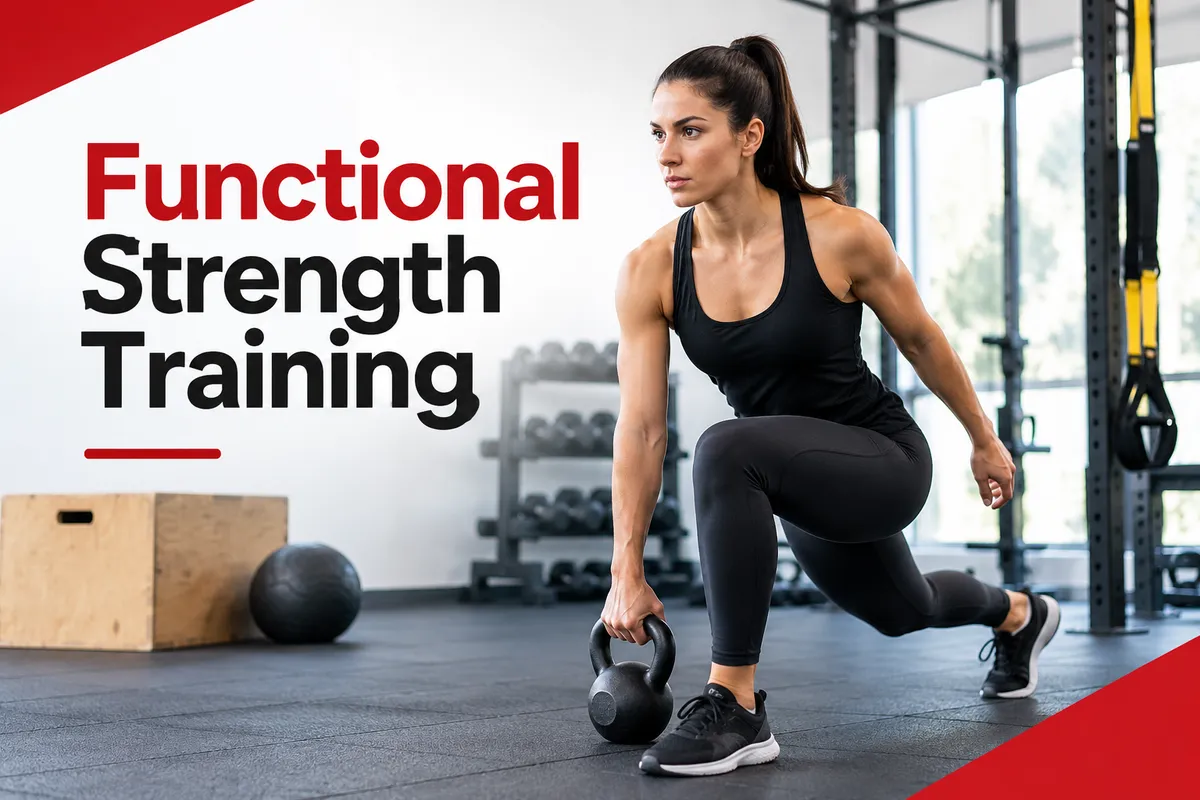
What Is Functional Strength Training? Benefits & Guide
Functional Strength Training: What It Is and Why It Matters for Everyday Life
Think about the last time you picked up a heavy grocery bag, lifted a child, climbed a flight of stairs, or got up from the floor. None of those moments needed a perfectly sculpted bicep. They needed a body that could coordinate, stabilize, and produce force in a useful way.
That is the idea behind functional strength training. It prepares your body for real movement, not just for the look of a workout.
This article explains what functional strength training is, how it differs from traditional gym training, which movements it relies on, and why it deserves a place in almost anyone’s routine. It also shows how to start safely, whether you are a beginner, a busy professional, or returning to fitness after a long break.
What Is Functional Strength Training?
Functional strength training is a style of exercise built around movement patterns you use in daily life. Instead of isolating one muscle at a time, it trains several muscles and joints together, the way your body actually works.
When you pick a box up off the floor, your legs, hips, core, back, shoulders, and grip all fire in sequence. Functional training practices that pattern directly, so the strength you build carries over into everyday tasks.
Most functional programs are built around a handful of basic movements:
Squatting: sitting down and standing up, getting off a couch or toilet
Hinging: bending at the hips to lift something from the ground
Pushing: pushing a door, a heavy cart, or yourself up from the floor
Pulling: opening a heavy door, pulling a suitcase, rowing motions
Carrying: groceries, bags, children, luggage
Rotating: twisting to reach into a back seat or turning to look behind you
Lunging and stepping: climbing stairs, walking uphill, changing direction
These patterns show up in nearly every part of life. A well-designed functional program trains them in a balanced way.
How It Differs From Traditional Gym Training
Traditional gym workouts often focus on isolation: a leg extension machine for the quads, a curl machine for the biceps, a chest press for the pecs. These can be useful, especially for bodybuilding or rehabilitation. But they usually support the body in a fixed position, so your stabilizing muscles do very little work.
Functional training flips that. It asks your body to balance, brace, and coordinate while it moves. A few key differences:
1. Multi-joint movements. Exercises like squats, step-ups, and rows involve several joints and muscle groups at once. This is closer to how you move outside the gym.
2. Core engagement. Many functional exercises are done standing or in unstable positions, so your core is working to keep you steady. It becomes the link that transfers force between your upper and lower body.
3. Lighter, smarter loading. Functional training does not need very heavy weights. Bodyweight, resistance bands, light dumbbells, kettlebells, and medicine balls are common tools. The focus is on quality of movement rather than the number on the bar.
4. Balance and coordination. Single-leg work, carries, and multi-directional movements train your nervous system as well as your muscles.
This does not make traditional training “wrong.” Many people do best with a mix. But if your goals include feeling capable, moving without pain, and staying independent as you age, functional training offers something machines often miss.
Why Functional Strength Training Matters
1. It Builds Strength You Actually Use
The most obvious benefit is also the most important. Because the exercises mirror daily tasks, the strength transfers. Carrying shopping bags feels lighter. Lifting a toddler stops straining your back. Standing for long hours becomes less tiring.
This kind of strength is sometimes described as “usable strength.” It is the ability to apply force in real situations, in different positions, and with good control.
2. It Supports Better Posture
Many of us spend hours bent over phones, laptops, steering wheels, and sewing or kitchen counters. Over time, that can leave the upper back rounded, the hips tight, and the deep core muscles underused.
Functional training strengthens the muscles that hold you upright: the glutes, the muscles along your spine, the upper back, and the deep abdominals. Stronger postural muscles make it easier to stand and sit well without constantly thinking about it.
3. It Can Help Reduce Injury Risk
Injuries in daily life often happen when the body is asked to do something it is not prepared for: twisting awkwardly while lifting, losing balance on a step, or moving suddenly after long periods of sitting.
By training balance, stability, and joint control, functional exercise helps your body handle those moments better. No program can guarantee you will never get hurt, but building well-rounded strength and coordination is one of the most sensible ways to lower the odds.
4. It Improves Balance and Coordination
Balance is a skill that fades if you do not practice it. Single-leg exercises, step-ups, and carries all challenge your balance system. Over time, this improves your confidence moving around, whether that is on uneven ground, stairs, or crowded places.
This matters at every age, but especially as we get older. Falls are a major health concern for older adults, and strength, balance, and leg power are among the factors that influence fall risk. Training these qualities earlier makes them easier to keep later.
5. It Supports Healthy Aging
From our thirties onward, we gradually lose muscle mass unless we do something about it, a process often called sarcopenia when it becomes significant. Muscle strength is closely linked with mobility, independence, and overall health in later life.
Functional strength training is a practical way to preserve that muscle and the movement skills that go with it. Getting up from a chair without using your hands, climbing stairs comfortably, and carrying your own bags are small abilities with a huge effect on quality of life.
6. It Builds Lean Muscle and Supports Fat Loss
Because functional exercises use many large muscle groups at once, they can raise your heart rate and use a good amount of energy. Combined with sensible nutrition, sleep, and consistency, this style of training can support fat loss while building lean muscle.
More muscle also helps with day-to-day metabolism, since muscle tissue uses energy even at rest. It is not a magic switch, but it is a meaningful part of a long-term approach.
7. It Is Good for Your Mind
Strength training is not only physical. Many people notice better mood, more energy, and better sleep when they exercise regularly. Moving with focus, controlling your breathing, and achieving small goals, like a deeper squat or a longer plank, can build confidence that spills into the rest of life.
For people managing stress, family responsibilities, or long work hours, a structured session can become a calm, predictable part of the week.
Who Is Functional Strength Training For?
Almost everyone can benefit, because the movements can be scaled up or down.
Beginners can start with bodyweight squats, wall push-ups, and supported step-ups.
Desk workers can use it to counter long hours of sitting and stiff hips.
Parents and caregivers can build the strength and back resilience needed for lifting, carrying, and bending throughout the day.
Busy professionals can get a full-body session in a short time.
Women returning to exercise after pregnancy can rebuild core and pelvic control gradually, ideally with guidance from a qualified instructor and clearance from their doctor.
Active adults and athletes can use it to improve movement quality and reduce imbalances.
Older adults can work on balance, leg strength, and independence.
If you have an injury, a medical condition, or are pregnant or postpartum, check with a healthcare professional before starting a new program. A good instructor will also adjust movements to match your body.
Common Functional Strength Exercises
Here are some exercises you will often see in a functional program. They can be done with little or no equipment.
Bodyweight squat or box squat. Trains the hips, thighs, and core while practicing sitting and standing.
Hip hinge or deadlift pattern. Teaches you to lift from the ground with your hips and legs rather than rounding your back. Often practiced first with a light kettlebell or dumbbell.
Step-ups and lunges. Build single-leg strength and balance, which supports stairs and walking.
Push-ups (on the wall, a bench, or the floor). Develop pushing strength in the chest, shoulders, and arms, while the core works to keep the body straight.
Rows with bands or dumbbells. Strengthen the upper back and counter slouching.
Farmer’s carry. Walking while holding weights at your sides trains grip, posture, core strength, and endurance. It is one of the simplest and most practical exercises there is.
Planks and side planks. Train the core to resist movement and keep the spine stable.
Rotational movements. Controlled twists with a light weight or band prepare your body for turning and reaching.
Glute bridges. Strengthen the glutes and hamstrings, which support the lower back and hips.
You do not need to do all of these in a single session. A good program rotates through them and gradually increases difficulty.
How to Start Functional Strength Training Safely
Begin With Movement Quality
Before adding weight, learn to move well. Focus on controlled tempo, steady breathing, and good alignment. If a movement feels sharp, painful, or unstable, scale it back.
Progress Gradually
You can make exercises harder in many ways without simply adding weight: more repetitions, a slower tempo, a smaller base of support, or a longer hold. Add challenge slowly so your body can adapt.
Train Two to Three Times a Week
For most people, two or three full-body sessions a week is a realistic and effective starting point. Rest days matter too, since your muscles get stronger during recovery.
Warm Up and Cool Down
Spend five to ten minutes on gentle mobility and easy movements before you start, such as hip circles, arm swings, and light squats. Finish with some stretching or slow breathing.
Get Guidance If You Can
An experienced instructor can check your form, personalize exercises, and keep you progressing safely. That is especially valuable if you are new to training, managing pain, or returning to exercise after a break.
Support It With Good Habits
Strength is built outside the gym as well. Eat enough protein and whole foods, drink water, sleep well, and try to keep moving throughout the day.
Functional Strength Training and Other Mind-Body Practices
Functional training pairs well with other disciplines that build control and awareness.
Reformer Pilates uses spring resistance to strengthen the body with very little pressure on the joints, which makes it a good complement for people who want controlled, low-impact strength work. Mat Pilates focuses on core strength and body control without equipment, and it is a good option for beginners or those returning after pregnancy. Yoga adds flexibility, balance, and breathing techniques that can reduce stress and improve recovery.
Many people find that combining these approaches works best: functional strength sessions to build practical power, plus Pilates or yoga to improve mobility, alignment, and calm. You can explore all of these options on the Wellness Club Zone services page.
Common Myths About Functional Strength Training
“It is only for athletes.” Not at all. It is arguably more valuable for non-athletes, because it improves ordinary daily movement.
“It will make me bulky.” Functional training builds lean, usable muscle. Significant muscle size usually requires specific heavy training and eating in a calorie surplus over a long time.
“I need to lift heavy weights.” You do not. Many effective sessions use bodyweight, bands, and light to moderate loads. Technique and consistency matter more than the weight.
“It is too easy to be effective.” Done properly, functional training can be challenging. Instability, single-leg work, tempo changes, and circuit formats can make light loads feel demanding.
“I am too old or out of shape to start.” The best time to start is now. Beginners at any age can improve strength and balance, provided they start at a suitable level.
A Simple Beginner Routine to Try
Here is a basic full-body session you can try two or three times a week. Do each exercise for about 8 to 12 repetitions, rest for 30 to 60 seconds, and repeat the whole circuit two or three times.
Bodyweight squats (or sit-to-stand from a chair)
Glute bridges
Wall or incline push-ups
Band or dumbbell rows
Alternating reverse lunges or step-ups
Plank for 20 to 30 seconds
Farmer’s carry for 30 seconds, using a light weight
Stop if anything hurts beyond normal muscle effort, and consult a professional if you are unsure about a movement.
Why Consistency Matters More Than Intensity
The biggest reason people do not see results is not a flawed program. It is stopping and starting. The body responds to repeated, manageable challenges over time.
A moderate session you do every week will beat an extreme session you do once and dread. Aim to build a routine you can maintain: a regular time, a clear plan, and a place where you feel comfortable. Support from a good instructor or a small group can also make the habit easier to stick with.
The Bottom Line
Functional strength training is not about chasing a certain look or lifting the heaviest weight. It is about building a body that works well in the life you actually live: lifting, carrying, climbing, bending, balancing, and staying active for decades.
The benefits reach well beyond the gym. You can expect better posture, steadier balance, stronger muscles, more energy, and more confidence in everyday movement. And because it can be scaled to nearly every age and fitness level, it is one of the most practical forms of exercise available.
If you are curious about trying it with expert guidance, you can learn more about Functional Strength Training at Wellness Club Zone, view the pricing options, or book a free trial class. To meet the team, visit the About page, and for questions, use the contact page. You can find more wellness reading on the Wellness Club Zone blog.
Start small, stay consistent, and let your strength build one everyday movement at a time.


