
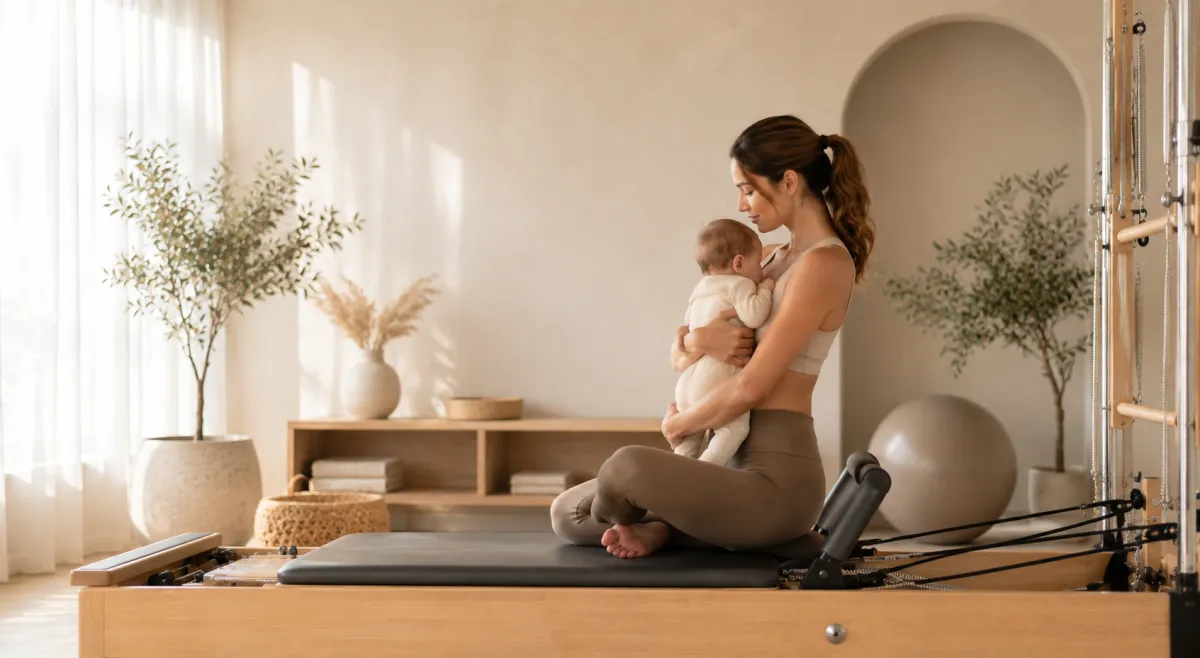
Reformer Pilates After Pregnancy: Safety, Timeline & Results
The weeks and months after having a baby are filled with advice from family, from doctors, from social media. But practical, honest guidance on postnatal fitness that is actually tailored to what a woman's body goes through during and after pregnancy is surprisingly rare.
This article is about one specific question: is Reformer Pilates safe and effective for post-pregnancy recovery and if so, when should you start, what will the sessions involve, and what results can you realistically expect?
Important first: No exercise programme should begin after childbirth without clearance from your doctor or gynaecologist. The guidance in this article is general information only. Every delivery and every body is different your medical team should guide your individual timeline.
Why Post-Pregnancy Recovery Needs Special Attention?
Pregnancy places extraordinary demands on the body over nine months. The abdominal muscles stretch significantly often separating at the midline in a condition called diastasis recti. The pelvic floor muscles, which support the bladder, uterus, and bowel, are placed under sustained pressure throughout pregnancy and further stressed during vaginal delivery. The lower back and hip muscles shift in response to the changing weight distribution and the hormone relaxin, which loosens ligaments to prepare for birth.
The result is a body that, even after delivery, is structurally different from before pregnancy. Core function is reduced. Pelvic floor strength is diminished. Postural patterns have changed. The typical advice to "start exercising again" six weeks after delivery treats none of this and jumping back into a regular gym routine without addressing these specific issues can actually make them worse.
This is exactly the gap that postnatal Pilates, and specifically Reformer Pilates, is designed to fill.
How Reformer Pilates Helps Postnatal Recovery?
Pelvic Floor Rehabilitation
Every Reformer Pilates session is built around breath and deep core engagement which means every session also works the pelvic floor. The controlled, low-pressure nature of the exercises allows these muscles to be reactivated progressively without being overloaded. This is fundamentally different from exercises like running or jumping, which create impact and intra-abdominal pressure before the pelvic floor is ready to handle them.
Diastasis Recti Recovery
Diastasis recti the midline separation of the abdominal muscles affects a significant percentage of women after pregnancy. Certain exercises (crunches, sit-ups, heavy lifting) can worsen this separation rather than heal it. Reformer Pilates focuses on the deep transversus abdominis, which is the muscle responsible for drawing the midline together, in a way that is both safe and effective for this condition. Our instructors at Wellness Club Zone are trained to screen for and work with diastasis recti from the very first session.
Restoring Postural Alignment
Pregnancy shifts the body's centre of gravity forward, which creates lasting changes in how the spine, hips, and shoulders sit at rest. Months of feeding whether breastfeeding or bottle feeding in a rounded, forward position compound these postural shifts further. Reformer Pilates specifically targets the postural muscles of the upper and lower back, systematically restoring alignment and reducing the chronic neck and shoulder pain many new mothers develop.
Rebuilding Functional Strength
A new mother carries, bends, lifts, and moves in ways that demand genuine full-body strength often before her core has recovered enough to support those movements safely. Reformer Pilates rebuilds this strength progressively and in a functional way, so that the physical demands of early motherhood become more manageable rather than a source of injury.
When Can You Start A Realistic Timeline?
Weeks
0 – 6
Rest and Gentle Recovery
No structured exercise. Focus on rest, nutrition, and the very gentle breathing and pelvic floor awareness exercises your midwife or physiotherapist recommends. Reformer Pilates is not appropriate at this stage.
Weeks
6 – 10
Medical Clearance & Assessment
Attend your postnatal check-up. If your doctor clears you for exercise and specifically if there are no significant pelvic floor concerns or diastasis recti complications this is when gentle Reformer Pilates may begin. Our instructors assess each new postnatal member individually before the first session.
Weeks
8 – 16
Foundation Phase
Early sessions focus entirely on breath, pelvic floor reactivation, gentle core engagement, and postural restoration. The Reformer machine is set to assist rather than resist these sessions are not about intensity; they are about reconnecting with the body and rebuilding from the inside out.
Months
4 – 6
Progressive Strengthening
As core and pelvic floor function improves, sessions become progressively more challenging. Resistance increases, exercise complexity grows, and the full range of Reformer movements becomes available. By this stage, most members are training in a way that feels genuinely demanding not just rehabilitative.
Month
6+
Full Training & Maintenance
With a solid postnatal foundation in place, members can integrate additional classes Mat Pilates, Yoga, or Functional Strength Training to build a complete and well-rounded weekly fitness routine.
What About After a C-Section?
Recovery after a caesarean section requires additional care because of the surgical incision through the abdominal wall. The general guideline is to wait until the incision has fully healed typically eight to twelve weeks before beginning any exercise that engages the abdominal muscles.
Once cleared by your surgeon, Reformer Pilates is actually particularly well-suited to C-section recovery. The machine's support means the abdominal muscles are never loaded more than they can safely handle at any stage. Our instructors will avoid any exercises that create tension across the scar tissue until you are ready, and will progress the programme based on your individual healing rather than a fixed timeline.
C-section or vaginal delivery: Both are welcome at our Rawalpindi studio. We ask all postnatal members to share their delivery details and any medical guidance they have received before their first session, so we can design the programme appropriately from day one.
What Results Can You Expect?
Realistic expectations matter. Here is what members who attend two to three Reformer Pilates sessions a week consistently report across their postnatal recovery:
4–6 weeks: Improved pelvic floor awareness and control. Reduction in lower back discomfort. Better posture during feeding.
8–10 weeks: Visible core strength returning. Reduced fatigue from carrying and lifting. Shoulders and neck feel less tense.
3–4 months: Body composition changes becoming noticeable. Energy levels significantly improved. Returning to physical activities that felt impossible earlier in recovery.
6 months: Most members at this stage describe their fitness as better than pre-pregnancy not just recovered, but genuinely improved.
These are realistic outcomes from consistent attendance not guarantees. Every woman's body and recovery timeline is different. What Reformer Pilates provides is the most appropriate, progressive, and joint-safe framework for postnatal recovery available in Rawalpindi.
Frequently Asked Questions
How soon after giving birth can I start Reformer Pilates?
For vaginal deliveries, most women receive clearance from their doctor at the six-week check-up, after which gentle postnatal Reformer Pilates may begin. For C-section deliveries, this is typically eight to twelve weeks. Always get individual clearance from your own doctor before starting.
Is Reformer Pilates safe if I have diastasis recti?
Yes and it is one of the most recommended approaches for it. The key is working with a qualified instructor who screens for diastasis recti and avoids exercises that load the midline inappropriately. At Wellness Club Zone, our instructors do this as standard practice with all postnatal members.
Can I do Reformer Pilates while breastfeeding?
Yes. There are no contraindications between Reformer Pilates and breastfeeding. Stay well-hydrated before, during, and after sessions. Some women prefer to feed the baby before class for comfort our instructors are entirely understanding of whatever schedule works for you.
Do your instructors have postnatal training?
Yes. Our instructors at Wellness Club Zone are trained in postnatal Pilates modifications and are experienced working with new mothers at every stage of recovery. We also recommend booking a brief consultation before your first session so we can understand your specific delivery history and any medical guidance you have received.
How is this different from just going back to the gym?
A standard gym programme does not account for pelvic floor dysfunction, diastasis recti, or the postural changes of pregnancy. Certain common gym exercises sit-ups, heavy squats, high-impact cardio can actively worsen these conditions in the early postnatal period. Reformer Pilates is specifically structured to address postnatal physiology from the ground up, making it a far safer and more effective starting point before transitioning to broader fitness goals.


