
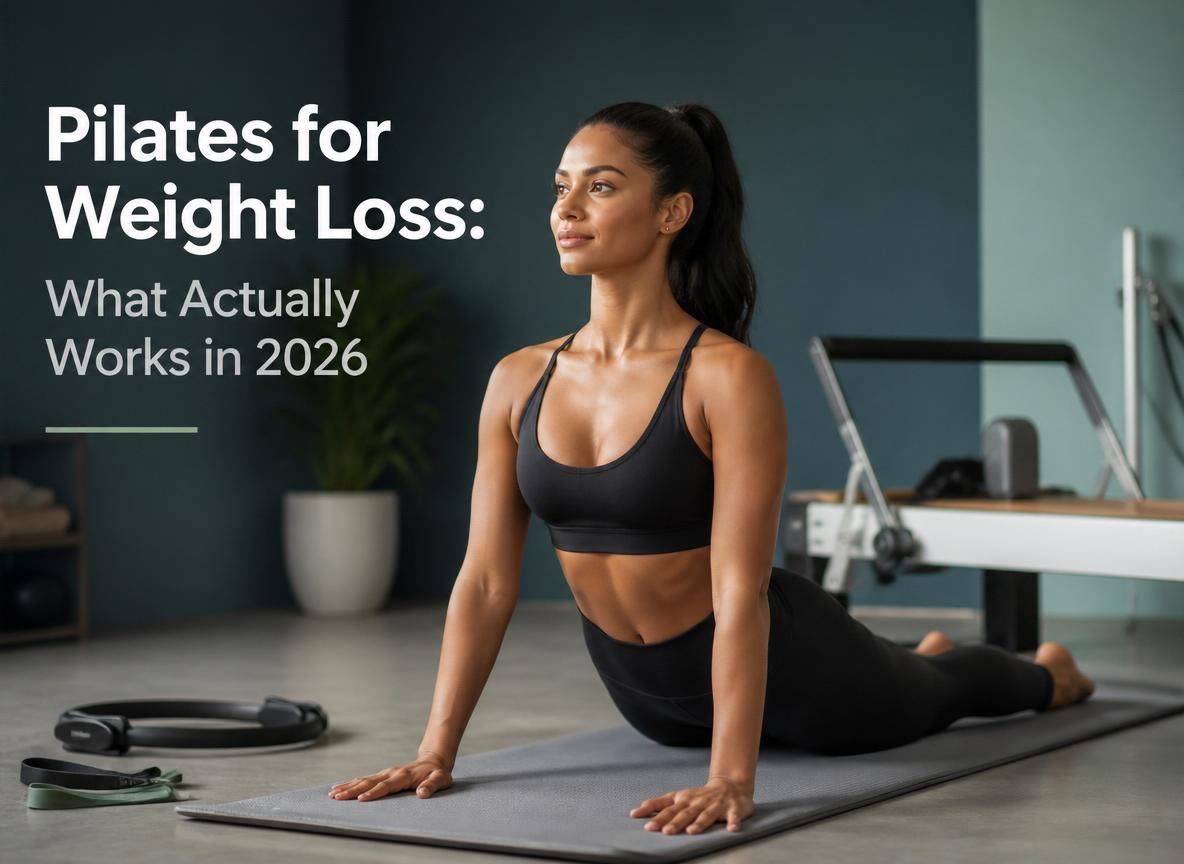
Pilates for Weight Loss: What Actually Works in 2026
You've seen it everywhere — toned bodies, flexible instructors, and before-and-after results on social media. But you're skeptical. You want to know whether Pilates for weight loss is the real thing or just an exercise trend dressed up with branded leggings and expensive equipment.
The honest answer is: yes, Pilates works for weight loss, but not in the way most people expect. It won't burn calories the way running does. What it does instead is build lean muscle mass, correct postural imbalances, and train the deep core muscles that most conventional gym workouts completely miss. Over time, that combination changes your body composition, your metabolism, and the way you carry yourself. This guide explains exactly how, and what you need to do to actually see results.
What the Research Actually Says About Pilates and Weight Loss
Pilates does burn calories, and the numbers are more useful than most articles admit. According to a 2020 study by Almeida et al., caloric expenditure varies significantly by session type and intensity level.
The American Council on Exercise found that a 30-minute beginner mat Pilates session burns around 108 calories, while an advanced session burns approximately 168 calories in the same duration. Reformer Pilates, which uses a spring-resistance machine, burns roughly 155 calories per hour at standard intensity. These numbers climb when sessions are longer, more dynamic, and practised consistently at three to four times per week.
What makes these figures matter beyond the raw calorie count is the metabolic effect. Pilates builds lean muscle tissue. Muscle burns more calories at rest than fat does, which means a body that has been through consistent Pilates training burns more calories throughout the day even when not exercising. That metabolic shift is where the real long-term weight loss happens.
The Muscle-Building Mechanism Most People Miss
Lean muscle mass is the variable that determines your resting metabolic rate. Most people trying to lose weight focus only on calories burned during exercise. That's the short game.
The longer and more powerful mechanism is what happens after a well-structured Pilates session. The eccentric and isometric contractions that define Pilates movement create micro-damage in muscle fibres. Repairing that damage consumes energy for hours after training ends. This is the same principle that makes resistance training so effective for body composition, and Pilates, particularly Reformer Pilates, uses resistance throughout every movement.
A 2025 randomized trial published in Scientific Reports confirmed that regular Reformer Pilates training produced significant improvements in body composition, including reduced fat mass and increased lean muscle, over a 12-week period among previously sedentary women. This isn't anecdotal. The mechanism is real and measurable.
Mat Pilates vs Reformer Pilates for Weight Loss: Which One to Choose
This is the most common question people have after deciding to try Pilates, and most articles dodge it. The answer depends on where you are in your fitness journey and what your body needs.
Mat Pilates
Mat Pilates is bodyweight-based and requires no equipment beyond a good mat and a qualified instructor. It is highly effective for beginners, post-pregnancy recovery, and people returning to fitness after injury or a long break. It focuses on core activation, spinal alignment, and controlled movement patterns.
Calorie burn is moderate — roughly 108 to 168 calories per 30-minute session depending on intensity and body weight. The primary benefit for weight loss is the postural correction and core strength it builds, which enables more intense training as fitness improves.
Reformer Pilates
Reformer Pilates uses a spring-loaded carriage system that adds resistance to every movement. That resistance is what pushes calorie burn higher, challenges muscles more deeply, and makes sessions feel more athletic without adding impact to joints.
For weight loss specifically, Reformer Pilates is the stronger choice. The additional resistance means muscles work harder, creating greater lean mass over time. Research published in Scientific Reports in 2025 showed that Reformer Pilates participants experienced significantly greater improvements in body composition compared to mat-only groups over 12 weeks.
Calorie estimates based on 2020 Almeida et al. study data and American Council on Exercise guidelines. Individual results vary by body weight and effort level.
Why Pilates Works When Other Exercise Doesn't Stick
Here's something most fitness articles won't say plainly: the exercise that produces weight loss is the one you actually keep doing.
In fitness research, adherence is the single strongest predictor of long-term results. A 2025 study published in the journal Sensors found that commitment to a consistent physical activity routine was more predictive of sustained weight loss than the intensity of any individual session. This matters because Pilates has one of the highest adherence rates of any structured exercise format.
Why? Because it doesn't destroy you. Pilates is low-impact, which means joints are protected. Sessions are structured, which means there's no confusion about what to do. Progress is visible, which keeps motivation consistent. And the mind-body connection built during Pilates practice changes how people relate to their bodies, making continued movement feel rewarding rather than punishing.
For women in Rawalpindi who've tried gyms and stopped, who've been consistent for two weeks and then dropped out, or who have back problems, knee issues, or post-pregnancy concerns, Pilates offers a format that removes most of the barriers that cause abandonment.
How Long Before Pilates Shows Results for Weight Loss
Expect a visible difference in body composition within eight to twelve weeks of consistent practice, at three to four sessions per week. This is not a promise — it's what the clinical research consistently finds.
The timeline looks like this:
Weeks 1 to 3: The nervous system is learning. You'll feel the sessions but may not see visible change. Core activation improves, posture begins to shift, and muscle soreness indicates that tissue is being challenged.
Weeks 4 to 6: Lean muscle increases. Clothes fit differently before the scale moves significantly. This phase confuses many people because their weight doesn't drop dramatically, but body composition is improving.
Weeks 7 to 12: Fat loss becomes visible. The muscle built in earlier weeks is now burning more calories at rest. Combined with improved dietary habits, this is where measurable changes in measurements and appearance occur.
The scale is often the wrong metric for Pilates results. Because Pilates builds muscle while reducing fat, total weight can stay the same while body shape changes meaningfully. Use measurements — waist, hips, and how clothing fits — as your primary indicators.
Common Mistakes That Stop Pilates from Working for Weight Loss
Most people who try Pilates and don't see results have made one of these specific errors.
Practicing only once a week. One session per week maintains fitness but doesn't build the lean muscle needed for metabolic change. Three to four sessions per week is the threshold that produces body composition results, according to the Pilates research literature.
Expecting fast calorie burn and comparing to cardio. Pilates does not compete with running or cycling on calorie burn per session. It competes on the cumulative effect of building lean muscle, improving movement quality, and maintaining consistent long-term practice. Judging Pilates by the cardio standard is the wrong comparison.
Skipping Reformer classes in favour of mat-only. Mat Pilates is valuable, but for weight loss specifically, the added resistance of Reformer training creates more muscular challenge and higher caloric expenditure. If weight loss is the primary goal, Reformer sessions should anchor the weekly schedule.
Not adjusting diet alongside training. Pilates alone, without attention to nutritional intake, produces limited weight loss. The exercise creates the metabolic conditions for fat loss. Eating decisions determine whether that potential is realised. A balanced whole-food diet — not a restrictive crash diet — is what supports Pilates-based weight loss.
Pilates for Weight Loss in the Rawalpindi Context
The local fitness market in Rawalpindi has changed meaningfully over the past two years. Reformer Pilates, which was almost exclusively a Karachi and Lahore phenomenon, has arrived in Rawalpindi. The Pilates Lab in Karachi, Route2Pilates in Lahore, and SHAPES Pakistan have demonstrated that structured, instructor-led Pilates produces genuine results for Pakistani women specifically.
Wellness Club Zone in Bahria Town Phase 7 offers Rawalpindi access to the same quality of structured Pilates training — both Mat and Reformer — led by certified instructors. Sessions are designed for women across all fitness levels, including complete beginners, those returning after pregnancy, and those with joint concerns that make conventional gym training difficult.
Classes run in small-group formats that allow instructors to correct form and adjust resistance individually, which is what separates structured studio Pilates from watching a video at home.
If you're in Rawalpindi and ready to start, the most useful next step is a free trial class. Experiencing one properly structured Reformer or Mat Pilates session with a qualified instructor gives you more useful information than any article can.
Book a free trial class at wellnessclubzone.com or contact Wellness Club Zone at 0309 0780850.
A Practical Weekly Schedule for Pilates Weight Loss Results
Consistency beats intensity every time. Here is a realistic schedule for someone whose primary goal is weight loss through Pilates.
Option A: Three Sessions Per Week (Beginner)
Monday: Mat Pilates (core focus, 45 minutes)
Wednesday: Reformer Pilates (full body, 50 minutes)
Friday: Mat Pilates or Yoga (flexibility and recovery, 45 minutes)
Option B: Four Sessions Per Week (Intermediate)
Monday: Reformer Pilates (resistance-focused, 50 minutes)
Wednesday: Functional Strength Training (complement to Pilates, 45 minutes)
Friday: Reformer Pilates (full body, 50 minutes)
Saturday: Mat Pilates or restorative Yoga (60 minutes)
The combination of Reformer Pilates and Functional Strength Training, both offered at Wellness Club Zone, creates a particularly effective structure for weight loss. Reformer sessions build lean muscle and improve body composition. Functional training adds higher-intensity calorie burn and supports everyday strength.
Who Pilates for Weight Loss Works Best For
Pilates is not equally suitable for every weight loss goal or body type. Here is an honest breakdown.
Pilates works best for:
Women with 5 to 15 kg of weight to lose who want toning alongside fat reduction
People with joint issues, back pain, or post-injury recovery needs
Those who've tried high-impact exercise and stopped due to discomfort or injury
Post-pregnancy women rebuilding core strength while managing excess weight
Anyone who needs a sustainable, low-risk exercise format they'll actually maintain
Pilates works less well as a standalone solution for:
People with more than 20 kg to lose, where higher-calorie-burn cardio is needed alongside Pilates
Those unwilling to adjust dietary habits
Anyone expecting rapid, dramatic transformation without consistent effort
The honest assessment is this: Pilates for weight loss is most effective when combined with dietary awareness and, for higher weight-loss targets, some complementary cardiovascular activity. It's not a shortcut. It's a sustainable system.
The Bottom Line on Pilates for Weight Loss
Pilates produces real, measurable weight loss results — through lean muscle development, improved metabolism, and a training format that most people actually sustain over the long term. The research is clear. The mechanism is understood. What's left is consistency and the right instruction.
Whether you start with Mat Pilates or go straight to Reformer depends on your current fitness level and budget. Either way, three to four sessions per week, practised consistently over eight to twelve weeks, will produce visible changes in body composition. Add dietary awareness and the results compound.
For Rawalpindi women looking to start, Wellness Club Zone in Bahria Town Phase 7 offers both Mat and Reformer Pilates with certified instructors, small-group classes, and a free trial session to experience it firsthand. Pricing and session availability may change over time — visit wellnessclubzone.com or call 0309 0780850 to confirm current details.
The first session costs you nothing but an hour. The results of starting now compound for months.
FAQ SECTION
Q: Can Pilates really help you lose weight? A: Yes. Pilates supports weight loss by building lean muscle mass, which increases resting metabolism, and through direct calorie burn during sessions. A 2020 study by Almeida et al. found that regular Pilates sessions burn between 116 and 306 calories per hour depending on type and intensity. For sustained fat loss, three to four sessions per week combined with dietary awareness produces the strongest results.
Q: How long does it take to see weight loss results from Pilates? A: Most people see measurable changes in body composition within eight to twelve weeks of practicing three to four times per week. The scale may not drop dramatically at first because Pilates builds muscle while reducing fat simultaneously. Body measurements, how clothes fit, and core strength are more reliable indicators of early progress than bodyweight alone.
Q: Is Reformer Pilates or Mat Pilates better for weight loss? A: Reformer Pilates burns more calories and creates greater muscular challenge due to the spring resistance system, making it the stronger choice for weight loss. Mat Pilates is valuable for beginners and post-pregnancy recovery. Ideally, a combination of both delivers the best results — Mat Pilates builds foundational strength and flexibility, while Reformer sessions add the resistance needed for body composition change.
Q: How many times a week should I do Pilates to lose weight? A: Three to four sessions per week is the minimum threshold that research supports for meaningful body composition change. One or two sessions per week maintains general fitness but is unlikely to produce significant fat loss. For best results, combine two to three Reformer sessions with one functional training or yoga session weekly.
Q: Does Pilates reduce belly fat specifically? A: Pilates cannot spot-reduce fat from any single area, including the abdomen. No exercise can. What Pilates does is build the deep core muscles beneath the superficial fat layer, creating better abdominal tone and posture. As overall body fat reduces through consistent training and dietary awareness, the abdominal area becomes more defined. Core exercises do not burn the fat directly above them, but they develop the muscle underneath.
Q: Is Pilates good for weight loss for beginners? A: Yes. Mat Pilates is an excellent entry point for beginners because it requires no equipment and can be scaled to any fitness level. A qualified instructor adjusts exercises to individual ability, making it both safe and effective from the very first session. Beginners typically progress to Reformer Pilates within four to six weeks of consistent mat practice.
Q: Can I lose weight doing Pilates at home without a studio? A: Home Pilates without proper instruction produces significantly weaker results than studio-based practice. The primary reason is form. Pilates effectiveness depends entirely on correct movement patterns, breathing coordination, and muscle activation sequences. Without an instructor watching and correcting, most people practice Pilates with incorrect form and miss the muscular engagement that makes it work. Studio classes with certified instructors deliver substantially better outcomes.
Q: What should I eat to lose weight while doing Pilates? A: No specific diet is required, but dietary awareness significantly amplifies Pilates results. The most effective approach is a balanced whole-food diet that avoids highly processed foods and excess refined sugar, maintains adequate protein for muscle repair and saturation, and is aligned with a modest caloric deficit. Restrictive crash diets combined with Pilates training are counterproductive because they reduce the muscle protein needed for the lean mass development that makes Pilates effective.
Q: Is Pilates better than the gym for weight loss? A: Better is the wrong word. Different is more accurate. Traditional gym training with heavy weights or high-intensity cardio burns more calories per session. Pilates builds more functional core strength, produces fewer injuries, and is sustained for longer by most people. Because adherence is the primary driver of long-term weight loss success, Pilates often outperforms gym training over six to twelve months for people who've previously struggled to maintain gym consistency.
Q: How many calories does a Pilates session burn in Pakistan's typical studio class? A: In a typical 45 to 60-minute studio Pilates session at moderate intensity, most people burn between 150 and 300 calories depending on body weight, session type, and effort level. Reformer Pilates sessions burn toward the higher end of that range. According to the Compendium of Physical Activities, Pilates MET values range from 1.8 for gentle mat work to 4.5 and above for dynamic Reformer sessions. These are estimates — individual variation is significant.


