
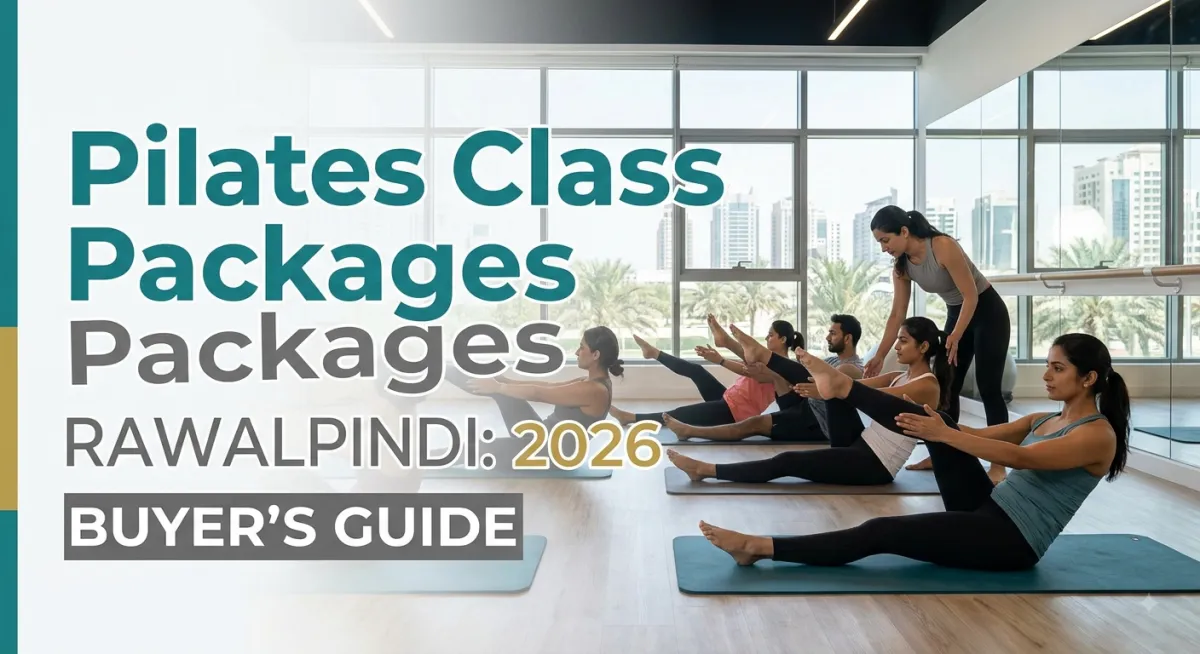
Pilates Class Packages Rawalpindi: 2026 Buyer's Guide
You've decided pilates is worth trying. Now you're looking at package options in Rawalpindi and realizing nobody explains what you actually get for the price, how the class formats differ, or whether a monthly membership makes more sense than a ten-session bundle. Pilates class packages in Rawalpindi vary more than most studios advertise upfront, and the wrong choice costs you money and motivation. This guide breaks down how the packages are structured, what the pricing reality looks like in 2026, which format fits which goal, and the questions most people forget to ask before signing the form.
What Pilates Class Packages in Rawalpindi Actually Include
Most studios in Rawalpindi offer packages in three broad formats: drop-in sessions, fixed session bundles, and monthly memberships. Each one serves a different type of client, and mixing them up is where most beginners waste money.
A drop-in session is exactly what it sounds like. You pay per class, no commitment, full flexibility. This works if you're testing a new studio or traveling frequently. The per-class cost is always the highest of the three options, typically 20 to 40 percent more than the per-session rate inside a bundle.
Fixed session bundles, usually sold in groups of 8, 10, or 20 sessions, offer a lower per-class rate in exchange for upfront commitment. These are the most common entry point for new pilates clients in Rawalpindi, and they make financial sense if you can realistically attend the sessions before the expiry date.
Monthly memberships work best for people with consistent schedules who attend three or more times per week. The math only favors the membership if you're disciplined with attendance. An unused membership is an expensive drop-in session.
The Difference Between Group Classes and Private Sessions
Group pilates classes in Rawalpindi run with anywhere from 4 to 12 participants depending on the studio. Equipment-based reformer classes tend to cap at smaller numbers because each client needs their own machine. Mat classes can run larger.
Private sessions are one-on-one with a certified instructor and cost significantly more, usually two to three times the group rate. They're not a luxury upgrade for most clients. They're a practical necessity for anyone recovering from an injury, managing a chronic condition like lower back pain or scoliosis, or starting from zero with no body awareness baseline.
The recommendation is direct: if you have any pre-existing physical condition, start with at least three to five private sessions before joining a group class. Trying to follow group cues without foundational alignment awareness is how people hurt themselves in pilates, which is supposed to be the opposite experience.
Semi-Private Packages: The Option Most Rawalpindi Studios Don't Promote Loudly
Semi-private sessions, typically two to four clients with one instructor, sit between group and private in both price and attention. In reviews of pilates studio structures across urban Pakistan markets in 2025, semi-private formats consistently showed the strongest results for clients in the beginner-to-intermediate transition phase.
You get more instructor correction than a group class allows and pay less than a private session. If this option exists at a studio you're considering, ask about it specifically. It's often not on the main package menu.
Pilates Pricing in Rawalpindi: What's Realistic in 2026
Pricing in Rawalpindi's fitness and wellness sector has shifted noticeably since 2024, partly due to inflation and partly because more certified studios have opened, raising the quality bar and the price floor simultaneously.
As a general reference based on current market positioning across Rawalpindi and the broader twin cities area, expect the following ranges. Always confirm actual pricing directly with the studio before booking, as rates change and packages are often revised seasonally.
Group mat pilates classes typically run between Rs. 800 and Rs. 1,800 per session on a drop-in basis. Ten-session bundles bring that per-class cost down to roughly Rs. 600 to Rs. 1,400 depending on the studio tier.
Reformer pilates group classes run higher given the equipment cost, usually Rs. 1,500 to Rs. 3,500 per drop-in session. Studio-quality reformer machines cost between $2,000 and $5,000 USD each, and that investment reflects in the pricing.
Private sessions in Rawalpindi's established studios range from Rs. 3,000 to Rs. 8,000 per session. The wide range reflects instructor certification level, studio location, and whether the session includes reformer equipment or is mat-only.
Monthly unlimited memberships at established Rawalpindi studios generally run Rs. 12,000 to Rs. 35,000 per month. The lower end usually covers group mat classes only. The upper range includes reformer access and sometimes a set number of private sessions per month.
These are reference ranges, not fixed prices. Verify everything directly with the studio.
How to Choose the Right Package for Your Actual Goal
This is where most people make the wrong call, not because the packages are confusing but because buyers match their budget first instead of matching their goal first.
If your goal is weight management and general fitness, group classes three times per week on a monthly membership give you the consistency and volume you need. A ten-session bundle works too, but only if you can use it within six to eight weeks before the expiry kicks in.
If your goal is postpartum recovery, start private. Diastasis recti, pelvic floor weakness, and changed core mechanics after pregnancy require individualized attention that group classes simply can't provide safely. A six-session private package followed by a transition to semi-private or small group is the sequence that works.
If your goal is athletic performance or sports injury rehab, the reformer is more useful than the mat for most people in this category. Look specifically for studios with instructors who have sports rehabilitation or physiotherapy backgrounds. In Rawalpindi, this credentialing is not universal, and it matters.
If you're a complete beginner with no fitness background, a beginner-specific group course, not an open group class, is the right starting point. Some studios in Rawalpindi offer structured four to six week introductory programs that teach foundational alignment before you join a mixed-level group. These are worth paying for even if they cost more upfront.
Not sure which package matches your current fitness level? Wellness Club Zone offers a free initial consultation to help you choose the right starting point. [Book Your Free Consult]
What Most Studios in Rawalpindi Don't Tell You Upfront
Package expiry dates are the biggest source of frustration among pilates clients, and they're rarely highlighted in the sales conversation.
A ten-session package that expires in 30 days sounds manageable until you travel for two weeks or get sick. Studios vary significantly on their extension and freeze policies. Before you pay for any bundle, ask three specific questions: How many days do I have to use these sessions? Can I freeze the package if I'm unavailable? Is there a fee to extend?
Class scheduling flexibility is the second thing to verify. Some Rawalpindi studios run a fixed timetable with peak-time classes that book out days in advance. If your work schedule only allows evening classes and the studio's 7pm slots are always full, the package value drops significantly regardless of the per-session price.
Instructor continuity matters more in pilates than in most fitness formats. Pilates is corrective and progressive, meaning your instructor needs to know your history, your weaknesses, and where you started. If a studio has high instructor turnover or frequently substitutes teachers, your progress will be slower. Ask how consistent the instructor assignment is before committing to a long package.
Reformer vs. Mat Pilates in Rawalpindi: Which Package Format Delivers More
Reformer pilates is not inherently better than mat pilates. It's different, and each serves different client needs more effectively.
Mat pilates requires nothing except floor space and a mat, which makes it widely accessible. The method develops intrinsic body strength because you're working against your own bodyweight with no external assistance or resistance adjustment. For clients building foundational core strength and body awareness, mat is often the better starting point.
Reformer pilates uses a spring-resistance carriage machine that allows the instructor to adjust load, position, and range of motion in ways that mat work can't replicate. This makes it especially effective for rehabilitation clients, for people with joint limitations, and for advanced practitioners who've plateaued on mat work.
In expert assessments of pilates progression pathways, most certified instructors recommend spending at least two to three months on mat fundamentals before moving to reformer. Jumping to reformer without that base means you're using the machine's assistance to compensate for alignment issues you haven't learned to correct yet.
From a cost perspective in Rawalpindi, reformer packages cost more and that difference is justified by the equipment, the smaller class size, and the higher instructor skill level required. If your studio is offering reformer classes at mat prices, ask about instructor certification credentials.
Red Flags to Watch for When Evaluating Pilates Studios in Rawalpindi
The wellness and fitness industry in Pakistan has grown quickly, and the quality gap between studios has widened as a result. Pakistan's fitness sector saw an estimated 35 to 40 percent increase in studio openings in major urban centers between 2022 and 2024, according to Pakistan Sports Board industry commentary from 2024. More options means more variance in quality.
Watch for these specific signals before committing money to a package:
Instructor certification that doesn't hold up to a basic question. A certified pilates instructor should be able to name their certification body. The globally recognized standards include STOTT Pilates, BASI Pilates, Balanced Body, and Power Pilates. These require 450 to 600 hours of training minimum. A weekend workshop is not the same thing.
No health intake form or physical history questionnaire before your first session. Any credible pilates studio collects basic health and injury information before putting you through a class. If they skip this step, they're not running a professional operation.
Group classes larger than 12 people with one instructor. Beyond that size, meaningful correction becomes impossible. You're essentially doing a fitness class with pilates branding.
Packages with no written terms. If the expiry dates, freeze policies, and refund conditions aren't in writing when you ask, assume they won't be honored in your favor when a dispute arises.
Before booking any package, read the studio's terms or ask for them in writing. Wellness Club Zone provides full package terms upfront. [See Our Packages]
The Scenario Where Group Packages Don't Work
Group pilates class packages fail a specific type of client, and that client often doesn't realize it until they've paid for sessions they can't use effectively.
If you have a significant injury history, a current pain condition, or a physical limitation that changes your movement patterns, a standard group package puts you in a room where the instructor can't give you the individual modifications you need consistently. You'll either push through movements that aren't appropriate for your body, or you'll sit out portions of class and feel you're not getting value for money.
For this client, the right sequence is a private assessment first, a short run of private or semi-private sessions, and then a transition to group once you have the vocabulary and the body awareness to self-modify when needed. The upfront cost is higher. The outcome is better and the risk of setback is lower.
Rawalpindi has enough studios now that finding one with this intake structure is realistic. It's worth calling ahead and asking directly whether the studio offers a beginner assessment before group class enrollment.
Making the Final Decision on Your Pilates Package
Pilates class packages in Rawalpindi give you real choices, but those choices only make sense when matched to your actual situation: your schedule, your physical starting point, your goal, and how many times per week you'll realistically show up.
The ten-session bundle is the most sensible starting point for most new clients in Rawalpindi who don't yet know their attendance pattern. It gives you enough sessions to see genuine early results, enough flexibility to avoid the pressure of a monthly commitment, and enough time to evaluate the studio and its instructors before going deeper.
If you're past the beginner stage and attending consistently, a monthly membership at a studio with early morning and evening slots will cost less per session than any bundle. Run the math against your realistic attendance before signing.
The fitness industry in Pakistan continues to mature, and clients in Rawalpindi now have access to studio quality that matches regional standards. You deserve to know what you're buying before you sign. Walk in, ask the hard questions, and choose the package that fits your life, not the one that fits the studio's upsell target.
Your body doesn't care what package you're on. It responds to consistency.
Pricing ranges mentioned in this article reflect general market observations in Rawalpindi as of 2026 and are subject to change. Always confirm current package pricing and terms directly with the studio before enrolling.
FAQ SECTION
1. How much do pilates class packages cost in Rawalpindi?
Group mat pilates packages in Rawalpindi generally range from Rs. 6,000 to Rs. 14,000 for a ten-session bundle, depending on the studio. Reformer pilates packages run higher, often Rs. 15,000 to Rs. 35,000 for ten sessions. Monthly memberships vary from Rs. 12,000 to Rs. 35,000. Always confirm current pricing directly with the studio, as rates change seasonally and vary by location.
2. What is the difference between a pilates class bundle and a monthly membership?
A bundle gives you a set number of sessions to use before an expiry date, usually 30 to 60 days. A monthly membership gives you unlimited or a capped number of classes within a calendar month. Bundles suit irregular schedules. Memberships make financial sense only if you attend consistently, typically three or more times per week.
3. Is reformer pilates worth the extra cost in Rawalpindi?
Yes, for specific client profiles. Reformer pilates offers adjustable spring resistance that mat work can't replicate, making it more effective for rehabilitation, joint limitations, and advanced progression. It costs more because the equipment is expensive and class sizes are smaller. For general fitness goals, mat pilates delivers strong results at a lower price point.
4. How many pilates sessions per week should a beginner start with?
Two sessions per week is the realistic starting point for most beginners. It gives your body enough frequency to build neural patterns without overwhelming recovery. Three sessions per week accelerates progress but requires your schedule to support it consistently. Starting with one session per week is too infrequent to build meaningful momentum in the early weeks.
5. Should I do private or group pilates classes first?
If you have any injury history, postpartum recovery needs, or a physical condition affecting your movement, start private. If you're generally healthy with no specific limitations, a structured beginner group course works well. The key word is structured: a beginner-specific course, not an open mixed-level class where the instructor can't slow down for new participants.
6. What should I ask a pilates studio before buying a package?
Ask these five things: What certification does my instructor hold? What is the package expiry date? Can I freeze the package if I'm unavailable? What is your class size limit? And do you offer a trial session before I commit? A studio that gives clear direct answers to all five is one you can trust with your money and your health.
7. Do pilates packages in Rawalpindi expire?
Most do. Typical expiry windows range from 30 to 90 days depending on the number of sessions in the package. Some studios offer freeze options for travel or illness, sometimes with a fee. Get the expiry and freeze terms in writing before you pay. Verbal agreements on package extensions rarely hold when you need them.
8. Is mat pilates or reformer pilates better for back pain?
Both can help with back pain, but the right choice depends on the cause and severity. Reformer pilates allows more precise load adjustment and is often preferred in rehabilitation settings. Mat pilates is effective for building the core stability that supports spinal health long-term. Either way, disclose your back condition before class and ensure your instructor has experience working with similar cases.


