
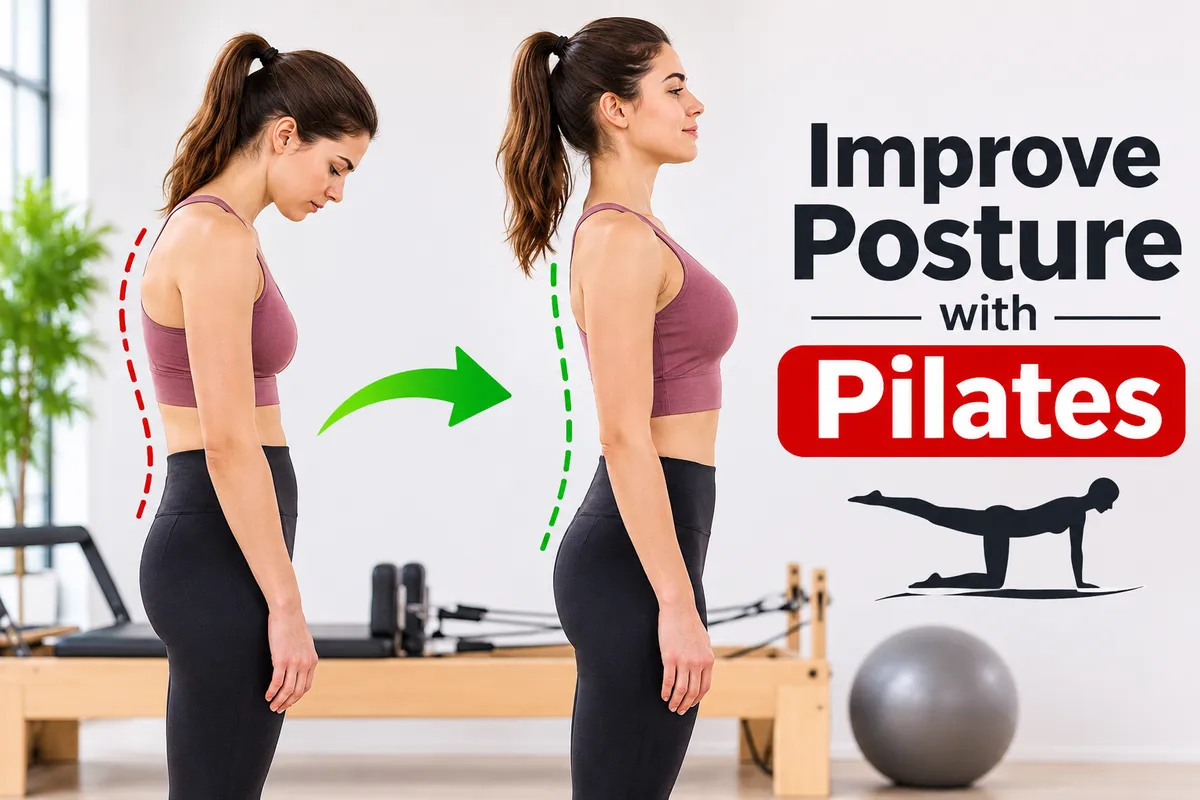
New How to Improve Posture with Pilates: 10 Easy ExercisesBlog Post
How to Improve Posture with Pilates: A Practical Guide for Everyday Strength and Alignment
If you spend your days hunched over a laptop, scrolling on your phone, or driving in traffic, your body has probably started to bend around those habits. Rounded shoulders, a forward head, an aching lower back, and a tight neck are not just cosmetic problems. They are signals that the muscles meant to hold you upright are tired, and the ones that pull you forward have taken over.
Pilates is one of the most effective, low-impact ways to reverse that pattern. It does not just ask you to "sit up straight." It teaches your body how to organize itself so that good posture feels natural instead of forced. In this guide, we will look at why posture breaks down, how Pilates addresses the root causes, which exercises work best, and how to build a routine you can actually stick with.
For more wellness inspiration beyond this article, explore the resources at Wellness Club Zone.
What Is Good Posture, Really?
Good posture is not a rigid, military stance. It is a neutral alignment where your bones stack efficiently and your muscles share the work of holding you up without strain.
From the side, a well-aligned body looks like this:
Ears sit over the shoulders
Shoulders sit over the hips
Hips sit over the knees
Knees sit over the ankles
The spine keeps its three gentle natural curves: a slight inward curve at the neck, an outward curve at the upper back, and a slight inward curve at the lower back
When you hold this alignment, gravity travels down through your skeleton instead of dragging on your muscles and joints. When you lose it, certain muscles are forced to overwork while others switch off. That imbalance is what leads to stiffness, pain, and fatigue.
Good posture is also dynamic. You should be able to move out of neutral, bend, twist, and reach, then return to it easily. This is exactly the kind of control Pilates trains.
Why Posture Breaks Down
Before fixing posture, it helps to understand what damages it. Most posture problems come from a combination of the following factors.
Prolonged sitting. Sitting for hours shortens the hip flexors, weakens the glutes, and encourages the upper back to round. Over time, the body adapts to the shape it spends the most time in.
Screen use. Looking down at a phone or forward at a monitor pushes the head ahead of the shoulders. For every inch the head travels forward, the neck muscles must work harder to support its weight. This pattern is often called "tech neck."
Weak deep core muscles. Many people can do crunches but still lack strength in the deep stabilizers, such as the transverse abdominis and the multifidus. These muscles act like a natural corset around the spine. When they are weak, the spine loses support.
Muscle imbalances. Tight chest muscles and weak upper back muscles pull the shoulders forward. Tight hip flexors and weak glutes tilt the pelvis and strain the lower back.
Stress and breathing habits. Shallow chest breathing keeps the neck and shoulders tense and limits movement in the ribcage, which affects how the upper spine moves.
Lack of body awareness. Many people simply do not notice when they slump. Without awareness, no amount of reminders will create lasting change.
Pilates tackles all of these at once, which is why it has become a favorite among physiotherapists, dancers, athletes, and desk workers alike.
How Pilates Improves Posture
Joseph Pilates developed his method in the early twentieth century with an emphasis on controlled movement, breath, and alignment. A century later, modern research and clinical practice continue to support its value for spinal health. Here is how it works.
1. It Strengthens the Deep Core
In Pilates, the "powerhouse" refers to the muscles of the abdomen, lower back, hips, and pelvic floor. Instead of chasing a burn in the surface abs, Pilates trains the deep stabilizing layers that support your spine all day long. A strong, responsive core means your torso can hold itself upright without constant conscious effort.
2. It Rebalances Tight and Weak Muscles
Many Pilates exercises lengthen what is short while strengthening what is weak. A single movement might open the chest while activating the upper back, or stretch the hip flexors while engaging the glutes. This two-way approach corrects the muscle imbalances that drag the body out of alignment.
3. It Builds Body Awareness
Pilates is slow and precise by design. You learn to feel where your ribs are, whether your pelvis is tilted, and how your shoulder blades are sitting. This awareness, often called proprioception, is the missing piece for most people. Once you can feel poor alignment, you can correct it automatically throughout the day.
4. It Mobilizes the Spine
A stiff spine cannot hold good posture comfortably. Pilates guides the spine through flexion, extension, side bending, and rotation in a controlled way, restoring the mobility that long hours of sitting take away.
5. It Teaches Breath Control
Pilates uses lateral breathing, where you expand the ribcage sideways and back rather than lifting the shoulders. This calms the nervous system, releases the neck and upper traps, and improves how the ribcage and thoracic spine move together.
If you are exploring other gentle ways to support your body, you can find more ideas in the healthy lifestyle guides at Wellness Club Zone.
The Key Pilates Principles for Better Posture
Before you start the exercises, keep these principles in mind. They matter as much as the movements themselves.
Centering: Initiate movement from your core, not your limbs.
Concentration: Stay mentally present and notice how your body feels.
Control: Move with intention rather than momentum.
Precision: Quality always beats quantity. A few well-aligned repetitions are better than many sloppy ones.
Breath: Inhale to prepare, exhale to engage and move.
Flow: Link movements smoothly instead of rushing or jerking.
10 Pilates Exercises to Improve Posture
The following exercises can be done on a mat at home. Move slowly, and stop if you feel sharp pain. If you have a back injury, osteoporosis, or any medical condition, check with your doctor or a qualified instructor first.
1. Pelvic Tilts
Targets: Lower back, deep abdominals, pelvic awareness
Lie on your back with knees bent and feet flat, hip-width apart. Inhale to prepare. As you exhale, gently flatten your lower back toward the mat by tilting your pelvis, then inhale and return to neutral. Repeat 8 to 10 times. This small movement teaches you the difference between a tucked, neutral, and arched pelvis, which is the foundation of good posture.
2. Imprinting and Neutral Spine Breathing
Targets: Deep core, ribcage control
Stay in the same position. Place your hands on the sides of your lower ribs. Breathe in and feel the ribs widen into your hands. As you exhale, draw your lower belly gently inward without gripping. Practice for one to two minutes. This trains the deep core and lateral breathing together.
3. Shoulder Bridge
Targets: Glutes, hamstrings, spinal mobility
From the same starting position, exhale and roll your spine off the mat one vertebra at a time until your body forms a diagonal line from shoulders to knees. Inhale at the top, then exhale and roll back down slowly. Do 6 to 8 repetitions. Strong glutes keep the pelvis stable and take pressure off the lower back.
4. Cat-Cow (Pilates Spinal Articulation)
Targets: Spinal mobility, upper back
On hands and knees, exhale and round the spine toward the ceiling, tucking the chin and tailbone. Inhale and extend, lifting the chest and tailbone gently. Move smoothly for 8 to 10 rounds. This warms up the entire spine and improves awareness of each segment.
5. Swan Prep (Gentle Back Extension)
Targets: Back extensors, chest opening
Lie face down with your hands under your shoulders and your elbows close to your body. Exhale, engage the core, and lift your head and chest slightly while keeping your neck long. Inhale to lower. Repeat 6 to 8 times. This strengthens the muscles that counter the slumped position and opens the front of the chest.
6. Swimming
Targets: Glutes, back muscles, shoulder stability
Still on your stomach, extend your arms forward and legs long. Lift opposite arm and leg a few inches, then switch in a steady rhythm while breathing evenly. Continue for 20 to 30 seconds. Keep your neck long and avoid craning your head upward.
7. Side-Lying Leg Lifts
Targets: Hips, glutes, lateral stability
Lie on your side with your body in one straight line, bottom arm supporting your head. Lift the top leg to hip height and lower with control. Do 10 to 12 repetitions per side. Strong hip muscles keep the pelvis level, which supports the spine above it.
8. Thread the Needle
Targets: Thoracic rotation, shoulder mobility
From hands and knees, slide one arm under your body, palm facing up, and rest your shoulder and ear on the mat. Hold for a few breaths, then reverse by opening that arm toward the ceiling. Repeat 5 times per side. This releases tension in the upper back and shoulders that often builds from desk work.
9. Chest Opener with Arm Reaches
Targets: Chest, shoulders, upper back
Sit tall or stand with arms by your sides. Inhale and reach your arms forward, then exhale as you sweep them out and back, squeezing the shoulder blades gently together without lifting the shoulders. Repeat 8 to 10 times. This counteracts rounded shoulders and strengthens the muscles between the shoulder blades.
10. Plank (Modified or Full)
Targets: Whole-body stability
With your hands under your shoulders and your body in one line from head to heels, hold the position while breathing steadily. Beginners can lower their knees. Start with 15 to 20 seconds and build up. The plank teaches your core, shoulders, and glutes to work together to maintain a long, stable spine.
For more movement and fitness ideas that pair well with Pilates, visit Wellness Club Zone for fresh articles and tips.
A Simple Weekly Pilates Plan for Posture
Consistency matters more than intensity. Here is a beginner-friendly schedule you can adapt to your life.
Monday (20 minutes): Pelvic tilts, neutral spine breathing, shoulder bridge, cat-cow, and swan prep.
Wednesday (20 minutes): Side-lying leg lifts, thread the needle, swimming, chest opener, and plank.
Friday (25 minutes): Combine both sessions into one flowing routine, adding a second round of the exercises you find most difficult.
Daily (3 to 5 minutes): Do a short posture reset. Stand tall, imagine a string lifting the crown of your head, relax your shoulders, take five lateral breaths, and gently draw your lower belly in.
Most people begin noticing improved awareness within two to three weeks. Visible and lasting changes in alignment typically take six to twelve weeks of regular practice, though everyone's body responds differently.
Mat Pilates vs. Reformer Pilates for Posture
Both styles can improve posture, but they offer different benefits.
Mat Pilates uses your own body weight and gravity. It is accessible, affordable, and easy to practice at home. It builds foundational core strength and body awareness.
Reformer Pilates uses a sliding carriage with springs that provide adjustable resistance and support. It is especially helpful for people who need guidance with alignment, since the machine gives feedback and allows more precise control. It also offers more variety for strengthening the upper back and shoulders.
If you are new to Pilates, starting with mat classes or a few sessions with a certified instructor is a smart way to learn proper form before practicing alone.
Everyday Habits That Support Your Pilates Practice
Pilates works best when you carry its lessons into daily life. A few small habits make a big difference.
Set up your workstation. Position your screen at eye level, keep your feet flat on the floor, and keep your elbows close to a 90-degree angle.
Move every 30 to 45 minutes. Stand, stretch, or walk briefly to interrupt long periods of sitting.
Raise your phone. Bring your device up toward eye level instead of dropping your head down.
Sleep in a supportive position. A pillow that keeps your neck in line with your spine helps prevent morning stiffness.
Carry bags evenly. Switch shoulders often or use a backpack with both straps.
Stay active. Walking, swimming, and strength training all complement Pilates beautifully.
Small lifestyle upgrades like these are often the difference between temporary improvement and permanent change. You can discover more everyday wellness habits at Wellness Club Zone.
Common Mistakes to Avoid
Overarching the lower back. Many people exaggerate the curve in the lumbar spine during exercises. Keep your ribs knitted down and your core gently engaged.
Gripping the neck and shoulders. If your neck is tense, you are using the wrong muscles. Soften your shoulders and lengthen the back of your neck.
Holding your breath. Breathing keeps movement fluid and the nervous system calm. Never hold your breath during an exercise.
Rushing through repetitions. Speed hides weakness. Slow down and focus on control.
Forcing perfect posture all day. Constantly holding yourself rigid creates tension. The goal is relaxed, supported alignment, not stiffness.
Skipping rest and variety. Your body needs recovery time. Mix Pilates with walking and other activity for balanced results.
Who Can Benefit from Pilates for Posture?
Pilates is suitable for a wide range of people because exercises can be modified up or down.
Office workers and remote professionals who sit for long hours
Students who carry heavy bags and study at desks
New parents who spend time bending and carrying
Older adults who want to maintain balance, strength, and independence
Athletes who want better movement efficiency and injury prevention
Anyone recovering from mild back stiffness who has medical clearance
If you experience persistent pain, numbness, tingling, or have a diagnosed spinal condition, speak with a healthcare professional before beginning any new exercise program.
Frequently Asked Questions
How long does it take for Pilates to improve posture?
Many people feel more aware of their posture within two to three weeks of practicing two to three times per week. More noticeable changes in strength and alignment usually appear after six to twelve weeks of consistent effort.
Can Pilates fix rounded shoulders?
Pilates can significantly help rounded shoulders by strengthening the upper back, opening the chest, and improving shoulder blade control. Combined with better daily habits, it is one of the most effective approaches.
How often should I do Pilates for posture?
Two to four sessions per week is ideal for most people. Short daily practice of five to ten minutes also works well if you cannot commit to longer sessions.
Is Pilates better than yoga for posture?
Both are beneficial. Pilates places a stronger emphasis on core stabilization and precise alignment, while yoga often focuses more on flexibility and holding poses. Many people enjoy combining the two.
Can I do Pilates at home without equipment?
Yes. Mat exercises require only a comfortable surface and a little space. Online classes or a few sessions with an instructor can help you learn correct technique.
Final Thoughts
Improving posture is not about forcing yourself into a stiff position. It is about building a body that supports you effortlessly. Pilates does this by strengthening the deep core, balancing tight and weak muscles, improving spinal mobility, and teaching you to feel what good alignment is like.
Start small. Choose three or four exercises from this guide, practice them a few times each week, and pay attention to how you sit, stand, and move throughout your day. Over time, those small, mindful choices add up to a stronger, taller, more confident you.
Ready to keep building healthier habits? Continue your journey with more wellness tips and resources at Wellness Club Zone.


