
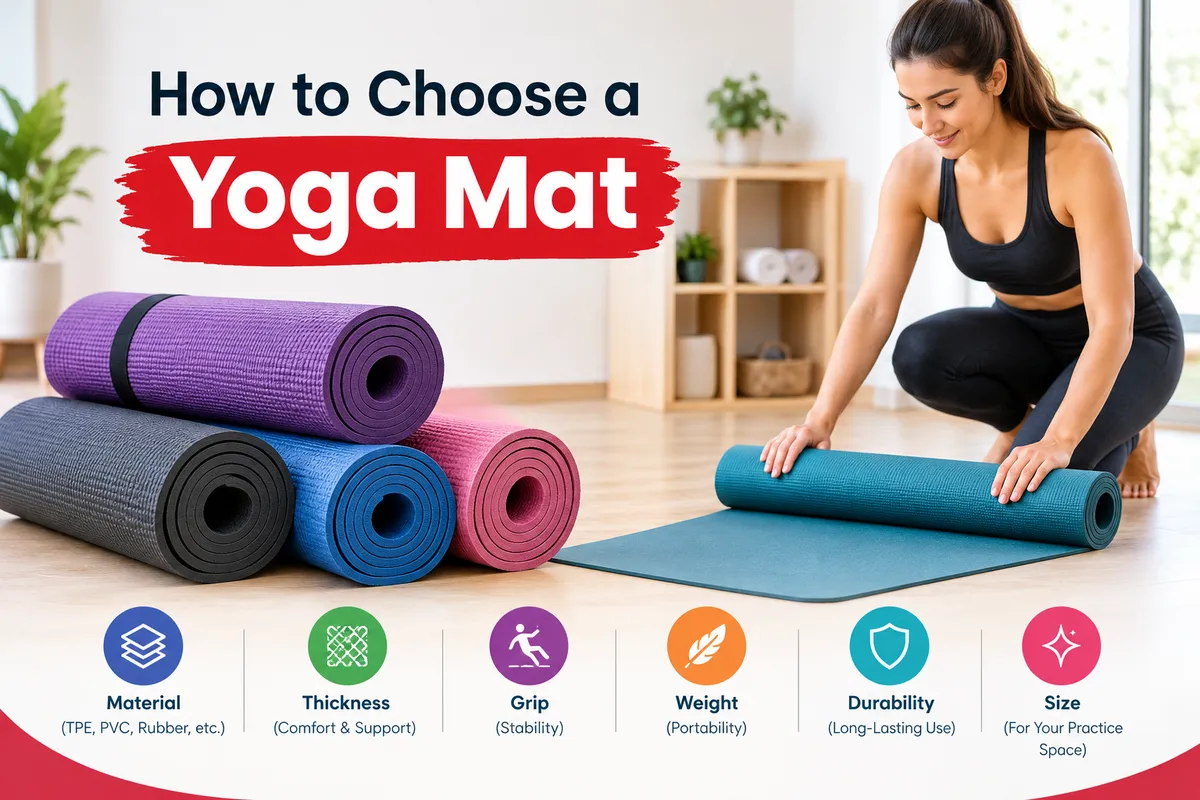
How to Choose a Yoga Mat: Complete Buyer’s Guide (2026)
How to Choose a Yoga Mat: The Complete Buyer's Guide
A practical guide to finding the mat that supports your practice, your body, and your budget.
Walk into any store or browse any online shop and you'll find hundreds of yoga mats: thick ones, thin ones, sticky ones, eco-friendly ones, travel-sized ones, and mats in every color imaginable. It's easy to feel overwhelmed. Yet the mat you choose matters more than most beginners realize. A good mat keeps you stable in downward dog, cushions your knees in low lunge, and makes your practice more comfortable and more sustainable. A poor one can leave you slipping, aching, and frustrated.
This guide walks you through every factor that matters when choosing a yoga mat, so you can buy once and buy well. If you're just building your wellness routine, you can also explore more healthy living guides at Wellness Club Zone for ideas on movement, nutrition, and daily habits that pair well with yoga.
Why Your Yoga Mat Matters More Than You Think
A yoga mat is more than a piece of foam. It defines the surface you practice on, and that surface affects three big things:
Safety. A mat with poor grip makes poses like warrior II or downward-facing dog risky, especially when your hands and feet get sweaty. A stable mat reduces the chance of slips and strain.
Comfort. Joints such as knees, wrists, and hips take pressure in many poses. The right cushioning protects them without making you wobble.
Motivation. It sounds minor, but people who enjoy their equipment tend to practice more often. A mat that feels good under your hands is one you'll want to unroll tomorrow morning.
The good news is that choosing well isn't complicated once you know what to look for. Let's go through the key considerations one by one.
1. Start With Your Style of Yoga
Before comparing materials or prices, think about how you actually practice. Different styles place different demands on a mat.
Hatha and gentle yoga. Slow, steady movements with lots of floor work. A mid-thickness mat (around 4 to 6 mm) with good cushioning works well.
Vinyasa and Ashtanga. Flowing, dynamic sequences that generate heat and sweat. You'll want excellent grip, ideally a mat that stays grippy when wet, and moderate thickness for stability.
Hot yoga and Bikram. Heavy sweating is guaranteed. Look for a highly absorbent or moisture-wicking surface, such as a natural rubber mat or a mat with a microfiber top layer. Many hot yoga practitioners also use a towel on top.
Yin and restorative yoga. Poses are held for several minutes, often with the body fully relaxed on the floor. Thicker, plusher mats (6 mm or more) provide the comfort you need for long holds.
Pilates and floor-based workouts. If you'll use the mat for core work, thicker cushioning protects your spine and tailbone.
Travel yoga. If you practice on the road, a thin, foldable mat (1 to 2 mm) is lightweight and packs easily.
If you do several styles, aim for a versatile all-rounder: medium thickness, reliable grip, and durable material.
2. Choose the Right Thickness
Thickness is one of the most debated mat features, and the answer depends on a balance between comfort and stability.
Thin mats (1 to 3 mm). These are light and portable and keep you close to the floor, which improves balance in standing poses. The tradeoff is less cushioning for sensitive knees and wrists.
Standard mats (4 to 5 mm). The sweet spot for most people. A standard mat offers enough padding for comfort while still feeling stable. If you're unsure, this is the safest place to start.
Thick mats (6 mm and above). Very cushioned and great for restorative practice, people with joint concerns, or anyone doing floor-heavy workouts. However, thick mats can feel unstable during balancing poses, and they're bulkier to carry.
A simple rule: the more you value balance and portability, the thinner your mat should be. The more you value comfort and joint protection, the thicker it should be. Many people with sensitive knees choose a standard mat and fold a small blanket under their knees when needed, getting the best of both worlds.
3. Understand Yoga Mat Materials
Material determines grip, durability, weight, environmental impact, and price. Here are the most common options.
PVC (Polyvinyl Chloride)
PVC mats have been the industry standard for years. They are durable, affordable, and offer excellent cushioning and grip. They're also easy to wipe clean and tend to last a long time. The downsides are environmental: PVC is not biodegradable and its production raises concerns. If sustainability matters to you, you may prefer an alternative. If you choose PVC, look for products labeled free of harmful phthalates.
Natural Rubber
Natural rubber is prized for outstanding traction, especially when wet. It feels dense and stable, and it's biodegradable. The drawbacks are weight (these mats can be heavy), a distinct rubbery smell that fades over time, and unsuitability for anyone with a latex allergy.
TPE (Thermoplastic Elastomer)
TPE mats are lightweight, recyclable in many cases, and generally more eco-friendly than PVC. They offer decent grip and cushioning at a moderate price. They may wear faster than PVC or rubber with heavy daily use, but they're a strong choice for beginners and casual practitioners.
Cork
Cork is naturally antimicrobial and becomes grippier as you sweat, which makes it a favorite for hot and vigorous practices. It's sustainable and attractive. Cork mats are usually layered over a rubber or TPE base, and the surface is a little firmer than foam.
Jute and Cotton
These natural-fiber mats offer a textured, earthy feel and are often used by people who prefer a minimalist or traditional practice. They provide less cushioning, so they suit people who like a firm surface.
Polyurethane (PU) Top Layer
Premium mats often pair a PU top layer with a natural rubber base. The PU surface absorbs moisture and delivers exceptional grip, making these mats popular among serious practitioners. They are typically the most expensive option and need careful cleaning.
4. Check the Grip and Traction
Grip is non-negotiable. A slippery mat forces your muscles to work overtime just to hold position, which can cause tension and, in the worst case, injury.
Two types of grip matter:
Dry grip. How the mat feels when your hands and feet are dry. Most mats perform fine here.
Wet grip. How the mat performs when you sweat. This is where differences appear. Natural rubber, cork, and PU-topped mats generally excel when wet. Some PVC mats become slick as moisture builds up, particularly when new.
Many new mats have a slippery coating from manufacturing. A gentle wipe-down with water and mild soap, or several uses, often improves traction. If a mat stays slippery after a few sessions, it may not be right for you.
Texture also plays a role. Mats with a fine pattern or embossed surface tend to hold your hands and feet better than perfectly smooth ones.
5. Consider Size and Length
Standard mats measure about 68 inches (173 cm) long and 24 inches (61 cm) wide. That works for many people, but not everyone.
If you're tall (over 5'10" or about 178 cm), consider an extra-long mat of 72 to 84 inches. Having your hands or feet hang off the mat in poses like downward dog or savasana can be distracting and uncomfortable.
If you want more room, wider mats of 26 to 30 inches give you extra space to move, which is helpful for larger bodies or dynamic flows with wide stances.
If you travel often, a compact or foldable mat makes sense, even if it is shorter.
To check your ideal length, lie down and measure from the top of your head to your heels, then add a few inches. A mat slightly longer than your height feels spacious and secure.
6. Think About Weight and Portability
If you practice at home and rarely move your mat, weight isn't a big concern. But if you carry your mat to classes, the gym, or the park, every pound counts.
A typical PVC mat weighs between 2 and 4 pounds. Natural rubber mats can weigh 5 to 7 pounds or more. Travel mats can weigh less than 2 pounds. If you commute with your mat, favor TPE or a thinner PVC option, and consider buying a carrying strap or bag.
It's worth remembering that a heavy mat tends to stay put on the floor, while a lightweight one may slide or curl at the edges. Matching the weight to your lifestyle prevents frustration.
7. Prioritize Durability and Density
You don't want to replace your mat every few months. Durable mats resist tearing, flaking, and compression.
Look for dense materials that spring back after pressure. Press your thumb into the mat: it should bounce back, not leave a lasting dent. Natural rubber and high-quality PVC are among the most durable. Cheaper foam mats may flake or crumble after months of heavy use.
A higher price doesn't always mean better quality, but extremely cheap mats often sacrifice durability. Reading reviews that mention long-term use (six months or more) can reveal how a mat holds up.
8. Pay Attention to Eco-Friendliness and Safety
More people are choosing mats that fit their values as well as their practice. If sustainability matters to you, look for:
Natural or recycled materials such as natural rubber, cork, jute, or recycled TPE
Certifications such as OEKO-TEX Standard 100, which indicates the product has been tested for harmful substances
Free-from claims like phthalate-free, latex-free (if you're allergic), or PVC-free
Brands that offer recycling or take-back programs
Be cautious of vague marketing terms like "green" or "eco" with no supporting details. Specific material and certification information is more trustworthy.
Also consider your own health. If you have a latex allergy, avoid natural rubber. If you're sensitive to strong smells, check whether a mat has a strong off-gassing odor, which is common in new rubber and some PVC mats.
9. Set a Realistic Budget
Yoga mats range from under $20 to well over $120. Here's what you can generally expect.
Budget ($15 to $30). Fine for trying yoga for the first time. Expect basic PVC or foam with moderate durability. These work well while you figure out your preferences.
Mid-range ($30 to $70). The best value for most people. You'll find quality PVC, TPE, and some natural rubber mats with solid grip and long lifespans.
Premium ($70 to $150). High-end natural rubber, PU, or cork mats with superior grip, durability, and often sustainable manufacturing. Worth the investment if you practice several times a week.
If you're a beginner, consider starting in the budget or mid-range tier. After a few months, you'll know what you actually want from a mat, and you can upgrade with confidence. For more ideas on building a balanced routine without overspending, browse the wellness resources on Wellness Club Zone.
10. Match the Mat to Your Body and Needs
Everyone's body is different, so a good mat should respond to personal needs.
Sensitive knees or wrists. Choose a thicker mat (6 mm or more) or pair a standard mat with a folded blanket or knee pad.
Back pain or spinal concerns. Look for supportive cushioning that doesn't feel mushy. A dense, medium-thick mat keeps the spine aligned while protecting bony areas.
Sweaty hands and feet. Choose natural rubber, cork, or a PU top layer, and consider a yoga towel.
Allergies. Avoid latex if you're allergic, and look for hypoallergenic, certified materials.
Pregnancy. A slightly thicker mat with reliable grip adds comfort and stability, but check with your doctor or a qualified prenatal teacher before practicing.
Listening to your body during your first few sessions tells you a lot. Persistent wrist pain, slipping, or discomfort are signs that your mat might not be the right match.
11. Try Before You Buy When Possible
If you have a local yoga studio or sports store, visit it. Feel the thickness, test the grip with your palms, and unroll a mat to check its size. Studio mats are also a great way to experiment: borrow or rent different types during classes and note which one feels best.
If you're buying online, read the return policy carefully. Many reputable brands offer trial periods, so you can test the mat at home and return it if it doesn't suit you.
12. Don't Overlook Accessories
A great mat becomes even better with a few simple additions:
A carrying strap or bag for easy transport
A yoga towel to improve grip and absorb sweat
A mat cleaner to keep the surface fresh and hygienic
Blocks and straps to support alignment and make poses more accessible
A bolster or folded blanket for restorative practice
These extras are optional but can dramatically improve comfort and longevity. If you're curious about other tools that support a healthy lifestyle, you can find more wellness product guides and tips here.
How to Care for Your Yoga Mat
Proper care extends your mat's life and keeps it hygienic.
Clean regularly. Wipe your mat after each use with a damp cloth. Once a week, use a mild solution of water and a few drops of gentle soap, or a dedicated mat spray. Avoid harsh chemicals, which can break down the material.
Air dry fully. Never roll up a damp mat. Let it dry flat or hang it in a shaded spot with good airflow.
Avoid direct sunlight. Prolonged sun exposure can degrade rubber and PVC, causing cracking or fading.
Store properly. Roll your mat loosely, with the top surface facing outward to reduce curling. Keep it away from extreme heat or cold.
Know when to replace it. If your mat is flaking, thinning, losing grip, or developing deep cracks, it's time for a new one. Most mats last between one and five years, depending on material and use.
Common Mistakes to Avoid
When shopping for a mat, watch out for these frequent errors:
Choosing based on color alone. A beautiful mat that slips or hurts your wrists isn't worth it.
Going too thick. More cushioning isn't always better. Overly thick mats can undermine balance.
Ignoring grip. Always prioritize traction over aesthetics.
Buying the cheapest option. Very low-priced mats often wear out quickly, costing more in the long run.
Forgetting your own needs. A mat that suits your friend may not suit your body or practice.
Skipping the return policy. Always check whether you can exchange or return the mat if it doesn't work out.
Quick Checklist: How to Choose a Yoga Mat
Before you buy, run through these questions:
What style of yoga will I mostly practice?
Do I need extra cushioning for my joints, or extra stability for balancing?
Does the material fit my values, allergies, and budget?
Is the grip reliable, including when I sweat?
Is it long and wide enough for my body?
Can I carry it comfortably if I travel to class?
Is it durable enough to last?
What is the return policy?
If you can answer these confidently, you're ready to choose.
Final Thoughts
Choosing a yoga mat doesn't have to be stressful. Start with your practice style, then narrow down by thickness, material, grip, size, and budget. For most beginners, a standard 4 to 5 mm mat in PVC, TPE, or natural rubber offers an excellent balance of comfort, stability, and value. As your practice grows, you can refine your choice based on experience.
Remember that the best yoga mat is the one that makes you want to step onto it every day. It should feel supportive, stay secure beneath you, and fit your lifestyle. Once you've found it, the real benefits begin: greater flexibility, a calmer mind, and a stronger, healthier body.
Ready to keep building your wellness journey? Visit Wellness Club Zone for more articles on fitness, mindful living, and healthy habits to help you feel your best, one breath and one pose at a time.


