
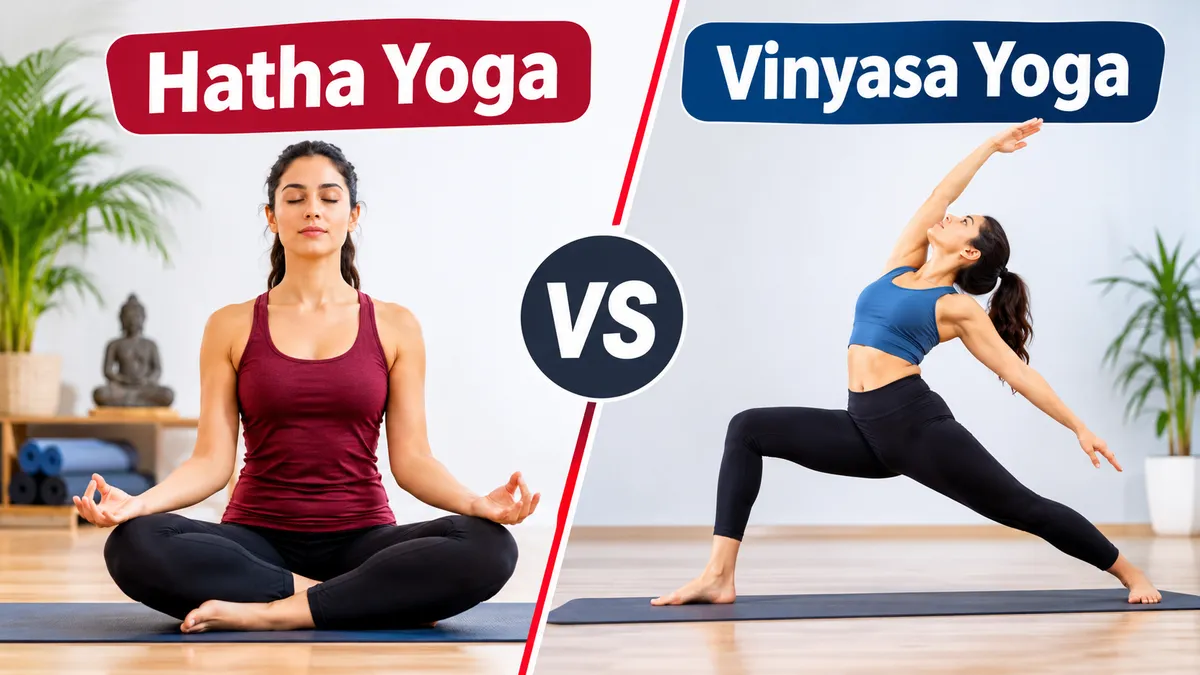
Hatha vs Vinyasa Yoga: Key Differences & Which to Choose
Hatha Yoga vs Vinyasa Yoga: Which Practice Is Right for You?
Walk into any yoga studio today and you will see a schedule packed with unfamiliar names: Hatha, Vinyasa, Ashtanga, Yin, Restorative, Power. For a beginner, it can feel like ordering from a menu written in another language. Two styles, however, appear on almost every timetable and cause the most confusion: Hatha yoga and Vinyasa yoga.
Both styles use the same poses. Both build strength, flexibility, and calm. Yet a Hatha class and a Vinyasa class can feel completely different. One may leave you feeling grounded and quiet; the other may leave you sweaty, energized, and pleasantly tired.
In this guide, we break down the real differences between Hatha and Vinyasa yoga, including their history, pace, benefits, and who each style suits best. By the end, you will know exactly which class to book first, and how to combine both for a balanced practice. If you are just starting your wellness journey, you can also explore more resources at Wellness Club Zone.
What Is Hatha Yoga?
"Hatha" is often used as an umbrella term for the physical side of yoga. The word comes from Sanskrit: ha means sun and tha means moon. Together, they point to the balance of opposing forces in the body and mind, such as effort and ease, strength and softness, activity and rest.
Historically, Hatha yoga is the root of most modern postural yoga. Texts such as the Hatha Yoga Pradipika, written around the 15th century, described postures (asanas), breathing practices (pranayama), and cleansing techniques as tools for preparing the body for meditation. Nearly every style you see in a studio today, including Vinyasa, grows from this tradition.
In a modern studio, a class labeled "Hatha" usually means something specific: a slower, gentler class where poses are held for several breaths, with pauses between them. The teacher typically explains alignment in detail, and there is time to settle into each shape.
What a Typical Hatha Class Looks Like
A standard Hatha class lasts 60 to 75 minutes and often follows a simple structure:
Centering and breathwork. You begin seated or lying down, tuning in to your breath.
Gentle warm-up. Neck rolls, shoulder circles, and cat-cow movements prepare the spine.
Standing poses. Mountain pose, warrior poses, triangle, and tree pose are held for about five breaths each.
Seated and floor poses. Forward folds, twists, and hip openers lengthen tight areas.
Relaxation. The class ends with Savasana, a final rest that lets the body absorb the practice.
The overall feeling is unhurried. You are encouraged to notice sensations, adjust your alignment, and breathe fully rather than rush.
What Is Vinyasa Yoga?
Vinyasa translates roughly as "to place in a special way." In practice, it refers to linking breath with movement so that one pose flows into the next. Rather than holding a posture and then pausing, you move continuously, inhaling and exhaling in rhythm with each transition.
Vinyasa developed in the 20th century, shaped heavily by the teacher Tirumalai Krishnamacharya and his students, including the founders of Ashtanga yoga. As yoga spread to the West, teachers began creating more creative, music-friendly flow classes, and "Vinyasa" became a popular style in gyms and studios worldwide.
What a Typical Vinyasa Class Looks Like
A Vinyasa class is more dynamic and usually builds in intensity:
Opening and warm-up. Slow stretches and a few rounds of Sun Salutations (Surya Namaskar).
Flowing sequences. You move from Plank to Chaturanga to Upward Dog to Downward Dog, often repeating this "vinyasa" between poses.
Peak or challenge poses. Many classes build toward a goal such as a balancing pose, arm balance, or deep hip opener.
Cool-down. Stretches slow the pace and release the muscles you used.
Savasana. A final rest to bring the heart rate down.
Because every teacher designs their own sequence, no two Vinyasa classes are exactly alike. That creativity is part of the appeal, but it also means you may find more variation in difficulty from class to class.
Hatha vs Vinyasa: The Key Differences
Although the two styles share many poses, several clear differences set them apart.
1. Pace and Rhythm
This is the biggest difference. Hatha is slow and deliberate, with poses held for several breaths and short pauses in between. Vinyasa is continuous and rhythmic, with each movement tied to an inhale or exhale. If Hatha is a quiet walk through a garden, Vinyasa is a steady jog along a river.
2. Intensity and Calorie Burn
Because Vinyasa keeps your body moving and your heart rate elevated, it generally burns more calories and builds more cardiovascular stamina. A typical Vinyasa class can feel similar to a moderate workout. Hatha, by contrast, burns fewer calories but builds muscular endurance and body awareness through holding poses.
3. Focus on Alignment
Hatha classes usually spend more time on alignment and technique. Since you hold each pose longer, the teacher has time to explain how to position your feet, hips, and shoulders safely. In Vinyasa, the pace leaves less room for detailed instruction, so alignment cues are often shorter.
4. Breathing Style
Both styles emphasize breath, but in different ways. In Hatha, you use the breath to settle into a pose and deepen stretches. In Vinyasa, the breath acts like a metronome that sets the speed of movement. Many Vinyasa teachers also use ujjayi breathing, a slightly audible, ocean-like breath that builds internal heat.
5. Class Structure and Predictability
A Hatha class tends to follow a familiar format, so you will often know what to expect. Vinyasa is more variable: one teacher may offer a gentle flow, while another delivers a fast, athletic sequence. If you like predictability, Hatha may feel more comfortable. If you enjoy variety, Vinyasa keeps things fresh.
6. Mental Experience
Hatha encourages stillness and patient observation. It can feel meditative, especially when you hold challenging poses and learn to stay calm. Vinyasa creates a "moving meditation" effect, where focusing on the next breath and movement quiets mental chatter. Some people find stillness hard; others find flow hard. Your preference may reveal which style you need most.
Quick Comparison Table
Feature | Hatha Yoga | Vinyasa Yoga |
|---|---|---|
Pace | Slow and steady | Moderate to fast |
Poses | Held for several breaths | Linked by flowing transitions |
Intensity | Gentle to moderate | Moderate to vigorous |
Alignment focus | High | Moderate |
Calorie burn | Lower | Higher |
Best for | Beginners, stress relief, flexibility | Fitness, endurance, active minds |
Class variety | Consistent format | Highly varied |
Benefits of Hatha Yoga
Hatha yoga offers a wide range of physical and mental advantages, especially when practiced regularly.
Improved flexibility. Holding poses gives muscles and connective tissue time to lengthen gradually.
Better posture. Slow practice builds awareness of how you sit, stand, and move through the day.
Stress reduction. The slow pace and focus on breathing can calm the nervous system and ease tension.
Joint-friendly strength. Isometric holds build strength without the repetitive impact of faster workouts.
A strong foundation. Learning poses slowly helps you move more safely if you later try faster styles.
Support for sleep. Many people find that an evening Hatha class helps them wind down and rest more deeply.
If stress, tight muscles, or desk-related stiffness are your main concerns, Hatha is a gentle and effective place to start.
Benefits of Vinyasa Yoga
Vinyasa brings its own set of rewards, particularly for people who want a more active practice.
Cardiovascular conditioning. Continuous movement raises your heart rate and improves stamina.
Full-body strength. Repeated Chaturangas, lunges, and standing poses build the arms, core, and legs.
Greater calorie burn. The flowing pace makes it a good complement to a weight-management plan.
Coordination and balance. Transitioning smoothly between poses sharpens body control.
Mental focus. Syncing breath and movement demands attention, which can quiet an overactive mind.
Creative variety. Constantly changing sequences keep workouts interesting and prevent boredom.
If you want a practice that feels like exercise while still offering the calming benefits of yoga, Vinyasa is hard to beat.
Which Style Is Better for Beginners?
For most absolute beginners, Hatha is the easier entry point. The slower pace gives you time to learn pose names, understand alignment, and become comfortable with the breath. You will not feel pressure to keep up with a flow, and you can ask questions without missing a transition.
That said, some beginners prefer to start with a beginner-friendly Vinyasa class. If you are already active, such as a runner, swimmer, or gym-goer, you may find Hatha too slow and enjoy the energy of a gentle flow. Look for classes labeled "Beginner Vinyasa," "Slow Flow," or "Gentle Flow."
The best choice is the one you will actually show up for. Consistency matters far more than the label on the class.
Which Style Is Better for Weight Loss?
Neither style is a miracle solution, but Vinyasa generally burns more calories per session because you are moving continuously. A vigorous Vinyasa class can raise your heart rate noticeably and build lean muscle. Hatha, while burning less during class, can support weight goals indirectly by reducing stress, improving sleep, and encouraging mindful eating habits.
For best results, combine yoga with balanced nutrition and other healthy habits. You can find more lifestyle tips and wellness guidance at Wellness Club Zone.
Which Style Is Better for Stress and Anxiety?
Both styles can reduce stress, but they work differently. Hatha's slow pace, long holds, and emphasis on stillness directly encourage the body's relaxation response. It is often recommended for people who feel overwhelmed, restless, or physically tense.
Vinyasa can also relieve stress, particularly for people who release tension through movement. If sitting still makes you more anxious, a flowing class may help you burn off nervous energy before settling into the final rest.
Which Style Is Better for Flexibility?
Hatha tends to have the edge for flexibility because long holds allow muscles to relax and lengthen. Vinyasa also improves flexibility, but the warm, dynamic movement is more about mobility and range of motion than deep, passive stretching. Many people use both: Vinyasa to warm up and build heat, and Hatha to stretch deeply.
Which Style Is Better for Strength?
Both build strength, but in different ways. Hatha develops strength through static holds, such as staying in Warrior II or Chair pose for a minute. Vinyasa builds dynamic strength through repeated transitions, like moving from Plank to Chaturanga many times. If you want visible muscle tone in the arms and core, Vinyasa usually delivers faster results.
Safety Tips for Both Styles
Regardless of which style you choose, keep these guidelines in mind:
Listen to your body. Discomfort from stretching is normal; sharp or pinching pain is a signal to back off.
Use props. Blocks, straps, and blankets make poses more accessible and safer.
Warm up first. Arrive a few minutes early to move gently before class begins.
Tell your teacher about injuries. A good instructor will offer modifications.
Stay hydrated. This matters especially in warm or fast-paced classes.
Skip the ego. Yoga is not a competition. Progress comes from patience and consistency.
If you have a medical condition, are pregnant, or are recovering from an injury, check with a healthcare professional before beginning a new practice.
How to Combine Hatha and Vinyasa
You do not have to choose just one style forever. Many experienced practitioners blend both to create a balanced routine. Here is a simple weekly example:
Monday: 45-minute Vinyasa flow to start the week with energy.
Wednesday: 60-minute Hatha class to focus on alignment and flexibility.
Friday: Vinyasa or a mixed-level flow to build strength.
Weekend: A gentle Hatha or restorative session for recovery.
This rhythm gives you strength, stamina, flexibility, and relaxation without overtraining. For more ideas on building healthy routines around your practice, browse the guides at Wellness Club Zone.
How to Choose the Right Class
When reading a studio schedule, keep these tips in mind:
Read the description. Words like "gentle," "slow," or "foundations" suggest a Hatha-style class. Words like "flow," "power," or "dynamic" point toward Vinyasa.
Check the level. Look for labels such as "all levels," "beginner," or "intermediate."
Try different teachers. The same style can feel very different depending on the instructor.
Experiment. Attend at least two or three classes of each style before deciding.
Consider your goal. Choose Hatha for relaxation and flexibility, Vinyasa for fitness and energy, or alternate based on how you feel.
Common Myths About Hatha and Vinyasa
Myth 1: Hatha is too easy. Holding poses can be surprisingly challenging. Staying in a lunge or chair pose for several breaths builds real strength and endurance.
Myth 2: Vinyasa is only for advanced students. Many Vinyasa classes are designed for beginners. Look for slower, simplified versions.
Myth 3: Yoga is only about flexibility. You do not need to touch your toes to start. Flexibility is a result of practice, not a requirement.
Myth 4: You must pick one forever. Your needs will change with your age, schedule, energy, and stress levels. Your practice can change too.
Final Thoughts
Hatha and Vinyasa yoga share the same ancient roots but offer different experiences. Hatha invites you to slow down, hold, and notice. Vinyasa invites you to move, breathe, and flow. Neither is better; they simply serve different needs on different days.
If you feel stressed, stiff, or new to yoga, start with Hatha. If you crave movement, energy, and a stronger workout, try Vinyasa. And if you cannot decide, do both. Your body and mind will tell you what they need.
The most important step is to begin. Roll out your mat, take a deep breath, and let your practice grow over time. For more articles on yoga, fitness, nutrition, and mindful living, visit Wellness Club Zone and continue your journey toward a healthier, more balanced life.
Frequently Asked Questions
Is Hatha yoga the same as Vinyasa yoga? No. Hatha is generally slower, with poses held for several breaths, while Vinyasa links poses together in a continuous, breath-guided flow.
Can I do Hatha and Vinyasa on the same day? Yes, as long as your body feels comfortable. Some people do a short Vinyasa flow to warm up and finish with a calming Hatha sequence.
How often should I practice? Beginners can start with two or three sessions per week and increase gradually as strength and confidence grow.
Which style is better for back pain? Gentle Hatha is often a good choice because of its slow pace and focus on alignment, but you should consult a healthcare professional and inform your teacher about any back issues.
Do I need to be flexible to start? Not at all. Yoga develops flexibility over time, and props can help you modify any pose.


