
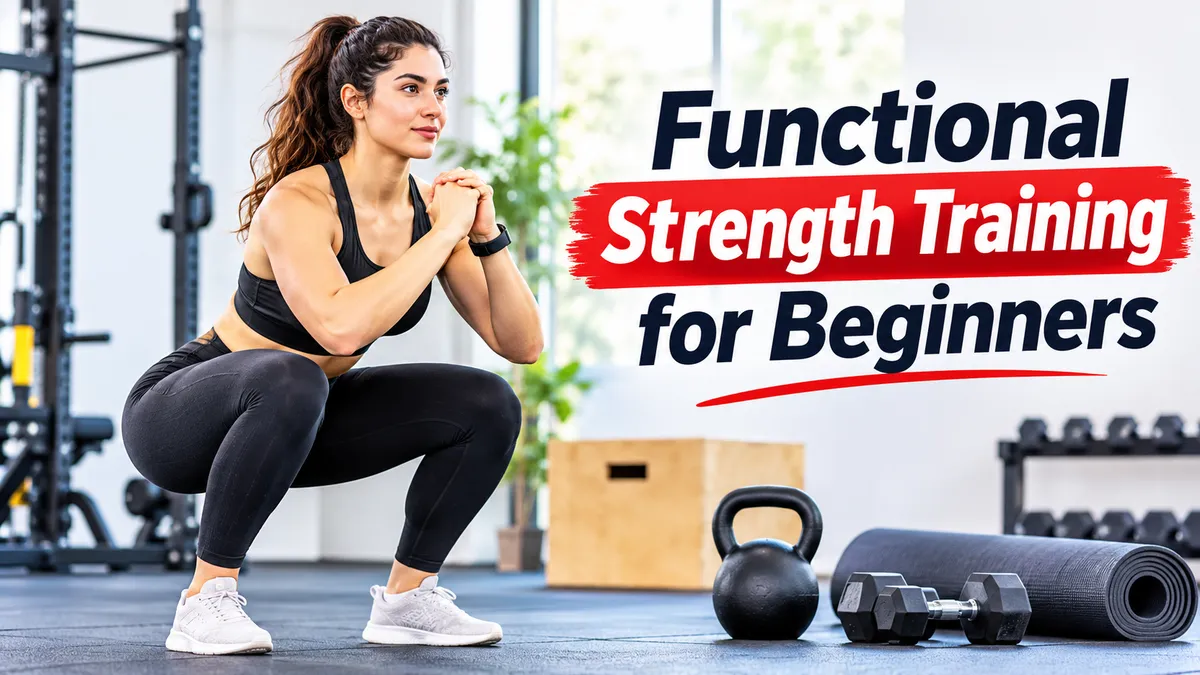
Functional Strength Training for Beginners: Complete Guide
Functional Strength Training for Beginners: A Practical Guide to Moving Stronger Every Day
Most people do not start exercising because they want a bigger bench press. They start because climbing stairs leaves them breathless, their back aches after a long day at a desk, or lifting a toddler, a grocery bag or a suitcase feels harder than it used to. If that sounds familiar, functional strength training may be the most useful place to begin.
Functional strength training builds the kind of strength you use in real life. Instead of isolating one muscle on a machine, you practise movements like squatting, pushing, pulling, carrying and balancing, the same patterns your body performs all day long. It is approachable, adaptable and gentle enough for beginners, yet effective enough to keep you progressing for years.
This guide explains what functional strength training is, why it works, which movements to learn first, and how to put together a simple beginner routine. By the end, you will have everything you need to start with confidence.
What Is Functional Strength Training?
Functional strength training is a style of exercise that prepares your body for the physical demands of daily life. The word "functional" simply means the exercises have a purpose beyond the gym. Standing up from a chair is a squat. Picking a box off the floor is a hinge. Pushing a heavy door open is a press. Carrying shopping bags up the stairs is a loaded carry.
Traditional machine-based workouts often train muscles one at a time while you sit or lie supported. Functional training does the opposite. It asks several muscles and joints to cooperate at once, while your core keeps you stable. That teamwork is what makes everyday tasks feel easier.
Beginners usually start with bodyweight exercises or light resistance, such as resistance bands or light dumbbells. There is no need for heavy barbells or complicated equipment. The goal is to move well first, then gradually add challenge.
Why Functional Strength Training Is Ideal for Beginners
If you are new to exercise, or returning after a long break, the best programme is one you can do safely and keep doing. Functional training fits that description for several reasons.
It Improves Everyday Strength
Because the exercises mirror real-life movements, the strength you build transfers directly to daily tasks. Carrying, lifting, bending, reaching and climbing all become smoother and less tiring.
It Builds a Strong Core and Better Posture
Nearly every functional exercise requires you to stabilise your trunk. Over time, that strengthens the deep muscles around your spine and hips, which supports better posture and can help reduce the stiffness that comes from long hours of sitting.
It Builds Lean Muscle and Supports Fat Loss
Multi-joint movements use a lot of muscle at once, so they burn more energy than isolated exercises. Combined with regular activity and sensible eating habits, this approach helps build lean muscle and supports healthy weight management.
It Improves Balance and Coordination
Many exercises are performed on one leg, in a split stance or while rotating. This trains your balance and body awareness, which becomes increasingly important as we age and is one of the best ways to lower the risk of falls.
It Is Scalable
Every exercise can be made easier or harder. A squat can be done to a chair, in the air, while holding a weight, or on one leg. That means you will not outgrow the method after a few weeks.
It Supports Mental Wellbeing
Strength training, like other regular exercise, is associated with better mood, improved sleep and lower stress. Focusing on controlled movement and steady breathing also gives your mind a break from the noise of the day.
Is Functional Strength Training Safe for Beginners?
For most healthy adults, yes. Bodyweight and light-resistance exercises are low risk when performed with good technique. That said, a few precautions are worth taking.
If you have a medical condition, a recent injury, high blood pressure, joint problems, or if you are pregnant or recovering from childbirth, speak with your doctor or a qualified professional before starting. Always begin with a short warm-up, stop if you feel sharp pain (as opposed to normal muscle effort), and never sacrifice form to complete one more repetition.
The Seven Fundamental Movement Patterns
Instead of memorising dozens of exercises, it helps to think in patterns. Almost every functional workout is built from the following seven. Learn these and you can build endless variations.
1. Squat
The squat is the movement of sitting down and standing up. Stand with your feet about shoulder-width apart, push your hips back and bend your knees, keeping your chest tall and your heels on the floor. Lower as far as you comfortably can, then press through your feet to stand.
Beginner option: squat down to a chair and lightly touch it before standing again.
2. Hinge
The hinge is the movement of bending from the hips, as when you pick something up from the floor. Keep your back flat, push your hips backwards and let your torso tip forward while your knees bend slightly. Squeeze your glutes to return to standing.
Beginner option: the glute bridge, lying on your back and lifting your hips toward the ceiling.
3. Lunge
The lunge trains you to move one leg at a time, building strength and balance together. Step forward or backward, lower your back knee toward the floor and push back to the start.
Beginner option: a supported split squat, holding a wall or chair for balance.
4. Push
Pushing movements, such as push-ups or overhead presses, strengthen your chest, shoulders and arms.
Beginner option: a wall push-up or an incline push-up with your hands on a table or sturdy bench. Lower the incline gradually as you get stronger.
5. Pull
Pulling movements strengthen your upper back and arms, which helps counter the rounded shoulders caused by desk work.
Beginner option: a resistance-band row, anchoring the band at chest height and pulling your elbows back while squeezing your shoulder blades together.
6. Carry
Carries are simple but powerful. Hold a weight in one or both hands and walk, keeping your posture tall and your core braced. They build grip strength, core stability and total-body endurance.
Beginner option: carry a light dumbbell, a water bottle or a bag of groceries for 20 to 30 seconds.
7. Rotate and Brace
This pattern trains your trunk to resist or control twisting. The plank is a classic example, because your core works to keep your body still. Dead bugs and bird dogs are also excellent choices.
Beginner option: a plank on your knees, or a bird dog with slow, controlled movements.
A Simple Full-Body Beginner Workout
Here is a straightforward routine you can do at home or in a studio. Perform it two or three times per week, with at least one rest day between sessions.
Warm-up (5 minutes): march in place, do 10 arm circles in each direction, 10 gentle hip circles each way, and 8 to 10 slow bodyweight squats.
Circuit (complete 2 rounds to start, working up to 3):
Exercise | Pattern | Reps / Time |
|---|---|---|
Chair squat | Squat | 10 to 12 reps |
Glute bridge | Hinge | 10 to 12 reps |
Incline push-up | Push | 6 to 10 reps |
Band row | Pull | 10 to 12 reps |
Reverse lunge (supported) | Lunge | 6 to 8 reps per leg |
Bird dog | Brace | 6 to 8 reps per side |
Suitcase carry | Carry | 20 to 30 seconds per side |
Rest for 30 to 60 seconds between exercises and 1 to 2 minutes between rounds. Choose a pace that lets you keep good form. By the final repetitions the effort should feel challenging but controlled, as though you could still do two or three more with good technique.
Cool-down (3 to 5 minutes): finish with gentle stretches for your hips, hamstrings, chest and shoulders, and a few slow, deep breaths.
Key Principles for Making Progress
A few simple ideas will help you improve steadily without burning out.
Master Form Before Adding Load
Quality always beats quantity. Practise each movement slowly, use a mirror or record yourself, and get feedback where you can. Once an exercise feels easy and smooth for all repetitions, you are ready to progress.
Use Progressive Overload
Your body adapts to the demands you place on it, so you need to increase those demands gradually. You can add repetitions, add a round, slow the lowering phase, reduce rest time, move to a harder variation or use a slightly heavier weight. Change only one variable at a time.
Be Consistent
Two or three sessions a week, done regularly, will deliver far better results than an intense burst followed by weeks off. Schedule your sessions the way you would schedule any important appointment.
Breathe
A common beginner habit is to hold the breath during effort. As a general rule, breathe out during the hardest part of the movement, such as standing up from a squat, and breathe in as you lower or return to the start.
Track Your Progress
Keep a short note of what you did, how many repetitions you completed and how you felt. Seeing improvement on paper is a powerful motivator, especially in the first few weeks when changes in the mirror may still be subtle.
Common Beginner Mistakes to Avoid
Doing too much too soon. Enthusiasm is great, but soreness that lasts a week is not a sign of a good workout. Start modestly and build.
Skipping the warm-up. Five minutes of preparation raises your body temperature, wakes up your muscles and reduces the risk of strain.
Rushing through repetitions. Speed often hides poor technique. Controlled, deliberate movement builds more strength and is safer.
Ignoring the core. Whatever the exercise, think about keeping your ribs stacked over your hips and your trunk firm. This habit protects your back and improves every lift.
Comparing yourself with others. Everyone starts somewhere. Measure progress against your own previous sessions, not someone else's.
Neglecting rest. Muscles get stronger during recovery, not during the workout itself. Rest days are part of the plan.
Recovery, Sleep and Nutrition
What you do outside your workouts matters as much as the sessions themselves. Aim for seven to nine hours of sleep, since this is when much of your recovery takes place. Drink water regularly throughout the day. Include a source of protein, such as eggs, lentils, yoghurt, chicken or fish, in your meals to support muscle repair, and fill the rest of your plate with vegetables, whole grains and healthy fats.
On rest days, light activity such as walking or gentle stretching can reduce stiffness and keep you moving. If you are feeling unusually tired or sore, it is always acceptable to take an extra day off.
Why Guided Training Can Make a Difference
You can certainly start on your own at home, but many beginners find that guidance speeds up progress and builds confidence. A qualified instructor can correct small technique errors you cannot feel, adjust exercises to suit your body, and keep you motivated when your own energy dips.
If you are in Rawalpindi or Bahria Town, Wellness Club Zone offers Functional Strength Training designed around bodyweight and light resistance, so the sessions are safe, practical and focused on the strength you actually use in daily life. Their instructors guide each class, making it a comfortable place to learn the basics.
Strength is only one part of overall fitness, and combining different styles of training can give you a more balanced body. Many people pair strength work with Mat Pilates to improve core control and flexibility, or with Yoga to ease stress and improve mobility. If you would like extra support for posture and joint-friendly toning, Reformer Pilates is another excellent option.
To learn more about the studio, its approach and its trainers, visit the About page. You can compare class options on the Pricing page, browse more wellness advice on the blog, or contact the team with any questions. When you are ready to try a session, you can book a class and take your first step in a welcoming, judgment-free space.


