
Can Beginners Do Reformer Pilates? A First-Timer’s Guide
Can Beginners Do Reformer Pilates? A Complete Guide for First-Timers
If you have ever walked past a Pilates studio and spotted rows of long, sliding machines with springs, straps, and pulleys, you may have wondered whether that kind of workout is only for dancers, athletes, or people who are already very fit. The honest answer is no. Reformer Pilates is one of the most beginner-friendly forms of exercise available, and many people start it with little or no workout experience.
Still, a machine you have never used can feel intimidating. Will you be able to keep up? Will it hurt? What if you are stiff, out of shape, or recovering from a break in your routine? This guide answers the most common questions beginners ask, explains what actually happens in a first class, and helps you decide whether reformer Pilates is the right place to begin your fitness journey.
What Is Reformer Pilates?
Pilates is a system of exercise built around controlled movement, core strength, posture, breathing, and body awareness. It was developed in the early twentieth century by Joseph Pilates, who originally designed a series of exercises to be done on a mat and later created equipment to add support and resistance.
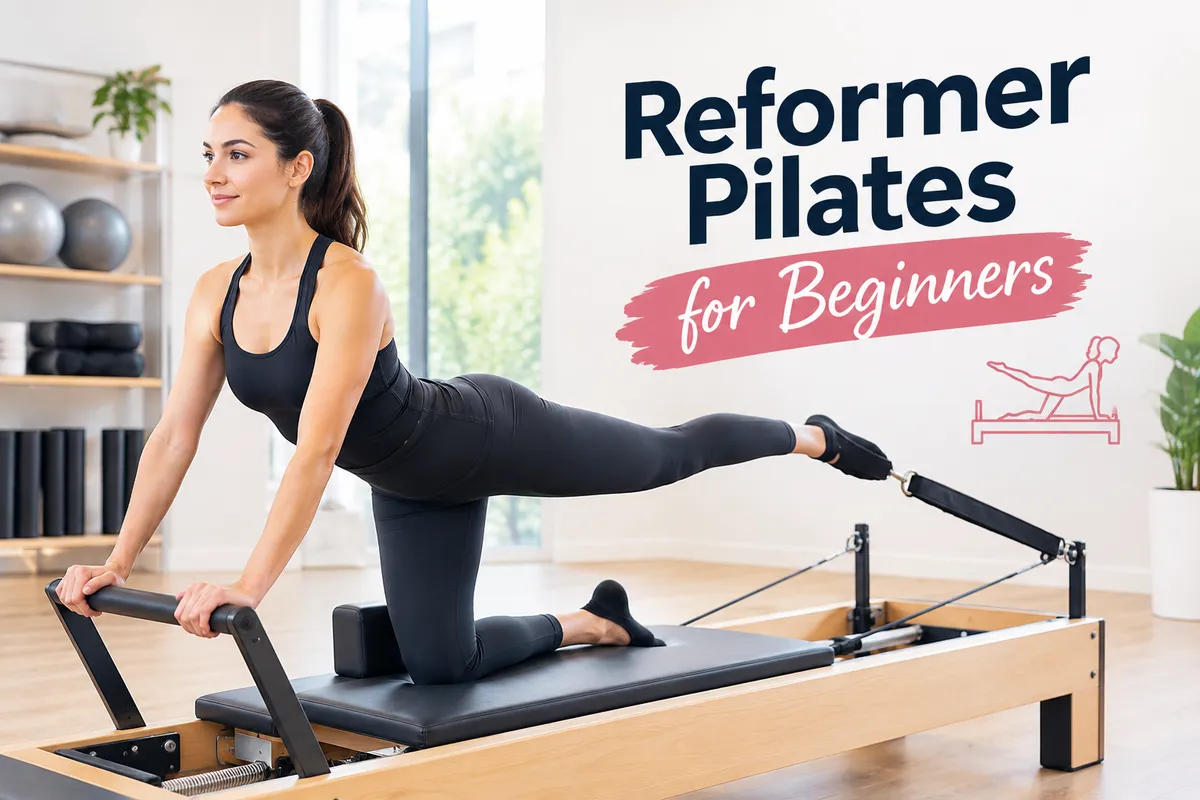
The reformer is the best known of that equipment. It consists of a flat padded platform (called the carriage) that glides back and forth on a frame. Springs attached to the carriage provide adjustable resistance, while a footbar, straps, and handles let you push and pull in many different positions. You might lie down, sit, kneel, or stand on it depending on the exercise.
The springs do two jobs at once. They challenge your muscles as you move, and they also support your body as you return to the starting position. Because the resistance can be made lighter or heavier in seconds, the same machine works for a first-time client and for an experienced athlete.
So, Can Beginners Do Reformer Pilates?
Yes, absolutely. In fact, many instructors consider the reformer easier to learn than mat work for complete beginners. There are a few reasons for that.
The machine gives feedback. On a mat, you have to rely on your own awareness to know whether you are moving correctly. On the reformer, the carriage, footbar, and springs guide your body into better alignment. If you push unevenly, you can often feel the carriage tilt or drift, which helps you correct yourself.
Resistance is adjustable. A beginner can use lighter springs to focus on form, then gradually add resistance as strength improves. Nothing about the workout requires you to start at a high level.
The movements are low impact. Unlike running or jumping workouts, reformer exercises do not involve pounding on the joints. This makes them a gentle option for people who feel nervous about starting something intense.
Classes are instructor-led. Good studios guide you through each movement step by step, adjusting the springs and your positioning as needed. You are never expected to figure it out alone.
In short, reformer Pilates meets you where you are. Studios such as Wellness Club Zone in Bahria Town, Rawalpindi describe their Reformer Pilates classes as suitable for all ages and fitness levels, which reflects how the method is typically taught.
The Benefits Beginners Can Expect
One of the reasons reformer Pilates has become so popular is the range of benefits it offers. Results vary from person to person, but these are the improvements most beginners hope for and often notice over time with consistent practice.
Better Posture and Alignment
Hours spent at a desk, on a phone, or doing household chores can leave you rounded through the shoulders and tight through the hips. Reformer exercises strengthen the deep muscles that support the spine and encourage you to move with better alignment, which can make standing and sitting feel easier.
A Stronger Core
In Pilates, the core means much more than visible abdominal muscles. It includes the deep stabilizing muscles around your abdomen, back, hips, and pelvis. Almost every reformer exercise asks you to engage this centre of the body, so core strength develops steadily without endless crunches.
Improved Flexibility and Mobility
The reformer lets you stretch while supported, so you can lengthen tight areas such as the hamstrings, hips, and shoulders without forcing them. Over weeks, many people find their range of movement feels more comfortable.
Lean Muscle Tone and Strength
Spring resistance works your muscles in both directions: as you push the carriage away and as you control it coming back. This builds lean, toned strength rather than bulk, and it works the whole body in a balanced way.
Gentle on the Joints
Because the movements are smooth and controlled, reformer Pilates is often chosen by people who find high-impact workouts uncomfortable. That said, anyone with a specific injury or joint condition should speak to a doctor first, which we cover below.
Stress Relief and Mind-Body Connection
Pilates asks you to focus on your breath and your movement. That concentration can be a welcome break from a busy day, and many people leave class feeling calmer and more centred.
Who Is Reformer Pilates Good For?
Beginners come to reformer Pilates from very different starting points. It is commonly a good fit for:
Complete beginners who have never followed a structured fitness routine
Desk workers dealing with stiffness, tight shoulders, or posture problems
People returning to exercise after a long break
Older adults looking for a joint-friendly way to stay strong and mobile
Busy parents and homemakers who want a focused, time-efficient workout
Athletes and active people who want to add strength and mobility work to their training
Women recovering after pregnancy, once cleared by a healthcare provider
The common thread is that the workout can be scaled up or down. You do not need to be flexible or strong to begin; those qualities develop with practice.
When You Should Check With a Doctor First
Reformer Pilates is generally considered safe for beginners, but it is wise to get medical advice before starting if you:
Are pregnant or recently gave birth
Have a spinal condition, a herniated disc, or ongoing back pain
Have osteoporosis or low bone density
Are recovering from surgery or an injury
Have high blood pressure, heart problems, or balance disorders
A good instructor will ask about injuries and health conditions before your first session and adapt exercises accordingly. Always be honest about anything that might affect how you move. This is general information, not medical advice, so your own healthcare provider is the best source of guidance for your situation.
What to Expect in Your First Reformer Class
The unknown is usually what makes people hesitate, so here is a typical picture of a beginner session.
Before Class
You will usually arrive a few minutes early to meet your instructor, mention any injuries, and learn the basics of the machine. Instructors often show you how to adjust the footbar, how the springs work, and how to get on and off safely.
The Warm-Up
Classes normally begin with gentle movements to wake up your core, loosen your spine, and introduce the breathing pattern. Expect to lie on your back at first, feet on the footbar, learning to move the carriage with control.
The Main Workout
The middle of the class works through exercises for the legs, arms, back, and core. Common movements include footwork (pressing the carriage with your feet), leg circles, arm pulls with the straps, and gentle spinal articulation. Instructors cue each step and offer modifications if something feels too hard.
You will probably find that the pace is slower than you expect. Slow, controlled movement is the whole point, and it is surprisingly challenging.
The Cool-Down
The session usually ends with stretches that lengthen the muscles you have worked. Many beginners notice they feel taller and looser afterwards.
The Day After
It is normal to feel mild muscle soreness, especially in the abdominals, glutes, and thighs. This usually eases within a day or two. Sharp pain, on the other hand, is a signal to stop and tell your instructor.
What to Wear and Bring
You do not need special equipment. Keep it simple:
Fitted, comfortable clothing that lets the instructor see your alignment while allowing free movement. Very loose clothing can catch in the springs.
Grip socks, which most studios require for hygiene and to stop your feet slipping on the footbar.
A water bottle to stay hydrated.
A small towel, if you tend to sweat.
Avoid heavy jewellery and anything that might snag on the equipment. If you are unsure, ask the studio when you book.
Common Beginner Mistakes (and How to Avoid Them)
Everyone makes mistakes at the start. Knowing the usual ones helps you progress faster.
Rushing the movement. Speed is the enemy of good form. If you are racing through exercises, the springs, not your muscles, are doing the work. Slow down and control the carriage in both directions.
Holding your breath. Concentrating can make you forget to breathe. Follow your instructor's breathing cues, as steady breathing helps you stay relaxed and engaged.
Tensing the neck and shoulders. Many beginners grip with their upper body. Remind yourself to keep your shoulders away from your ears and let your core lead the movement.
Using too much resistance too soon. Heavier springs are not always better. In many exercises, lighter resistance demands more control and stability.
Comparing yourself to others. The person next to you may have years of practice. Focus on your own progress and your own body.
Skipping the basics. It is tempting to jump to advanced classes, but a solid foundation in alignment and breathing makes everything that follows safer and more effective.
How Often Should Beginners Practise?
For most beginners, two to three sessions per week is a sensible target. This gives your body enough practice to learn the movements and build strength while leaving time to recover between classes. If that feels like too much at first, even one session weekly is a worthwhile start, and you can build up gradually.
Consistency matters more than intensity. Many people report feeling more body awareness within the first few classes, with changes in strength and posture building over several weeks of regular practice. Individual results differ, so be patient with yourself.
Reformer vs. Mat Pilates: Which Should You Start With?
Both styles share the same principles, and both are suitable for beginners. The difference lies in the equipment and the type of support.
Mat Pilates uses just your bodyweight on the floor. It is simple to start, needs no machine, and builds core strength and flexibility. However, without the machine's feedback, it can take longer to feel whether you are moving correctly. If you prefer to begin with fundamentals, a Mat Pilates class is a great entry point, especially for people returning to fitness after a break or after pregnancy.
Reformer Pilates adds springs and a moving carriage, which provide resistance, support, and feedback. Many people find it more engaging and quicker to learn, because the machine helps guide good form.
There is no wrong choice. Many people eventually combine both, using mat work to build foundation and the reformer to add variety and resistance.
Building a Well-Rounded Routine
Reformer Pilates works beautifully alongside other forms of movement. If you want a balanced approach to fitness, consider pairing it with:
Yoga, which adds flexibility, balance, and stress relief. Studios offering yoga classes often include styles from calming Hatha to energizing Vinyasa Flow.
Functional strength training, which builds the everyday strength you use for carrying, lifting, and standing for long hours. Take a look at functional strength training if you want to complement Pilates with practical, bodyweight-based conditioning.
Walking or light cardio, to support heart health and general stamina.
Mixing these approaches keeps your routine interesting and develops strength, mobility, and endurance together.
Tips for Making the Most of Your First Month
Choose a beginner-friendly studio. Look for qualified instructors, small class sizes, and a welcoming, judgment-free atmosphere.
Start with an introductory or trial class. This lets you try the machine and meet the instructor without a long commitment.
Tell your instructor everything. Share injuries, worries, and goals so they can tailor the session.
Ask questions. If a cue does not make sense, say so. Good instructors expect it.
Be patient. Control, coordination, and strength all develop gradually.
Rest and hydrate. Recovery is part of progress.
Track how you feel. Notice improvements in posture, energy, and mood, not just physical changes.
Frequently Asked Questions
Do I need to be flexible to start reformer Pilates?
No. Flexibility is something you build, not a requirement. The reformer actually supports your body while you stretch, which makes it easier to improve gradually.
Is reformer Pilates hard for beginners?
It can feel challenging because it works muscles you may not use often, but it is scalable. Lighter springs and simpler variations keep the workout manageable while you learn.
Will reformer Pilates help with weight loss?
It can support a healthy lifestyle by building lean muscle and encouraging regular movement, but weight loss depends on many factors, including diet, sleep, and overall activity. Think of Pilates as one helpful part of the picture rather than a quick fix.
Is it safe if I have back pain?
Many people with mild back discomfort find Pilates helpful, but you should consult a doctor or physiotherapist first, especially if the pain is persistent or severe. Let your instructor know so they can adapt the exercises.
How long before I see results?
This varies. Some people feel more aware of their posture and core within a few sessions, while visible changes typically take longer and depend on consistency, lifestyle, and goals.
Can men do reformer Pilates?
Yes. Reformer Pilates is for everyone, and it is popular with athletes and active men who want to improve core strength, mobility, and injury resilience.
How much does it cost?
Prices differ from studio to studio and by package. If you are in Rawalpindi, you can check the pricing page at Wellness Club Zone for current options.
Ready to Try It? Here Is How to Start
If you are curious about reformer Pilates, the best next step is simply to try a class. Reading about it is useful, but nothing replaces feeling the machine under your own body and hearing an instructor guide you through the movements.
For readers in Rawalpindi and Bahria Town, Wellness Club Zone offers instructor-led reformer, mat Pilates, yoga, and functional strength classes in a private, welcoming space. You can learn more about the studio and its team, get in touch with any questions, or book a free trial class to experience it for yourself. If you enjoy learning more before you commit, their blog is another good place to explore.
Final Thoughts
So, can beginners do reformer Pilates? Yes, and they often love it. The machine provides support and feedback, the resistance can be adjusted to your level, and the low-impact movements make it an approachable way to build strength, improve posture, and feel better in your body.
The most important thing is to start where you are. You do not need to be fit, flexible, or experienced. You only need to show up, listen to your body, and be willing to learn. With patient, consistent practice and a good instructor, reformer Pilates can become a rewarding part of a healthier, stronger, more balanced life.
This article is for general information only and is not medical advice. Consult a healthcare professional before starting any new exercise program, particularly if you have an existing health condition or injury.


