
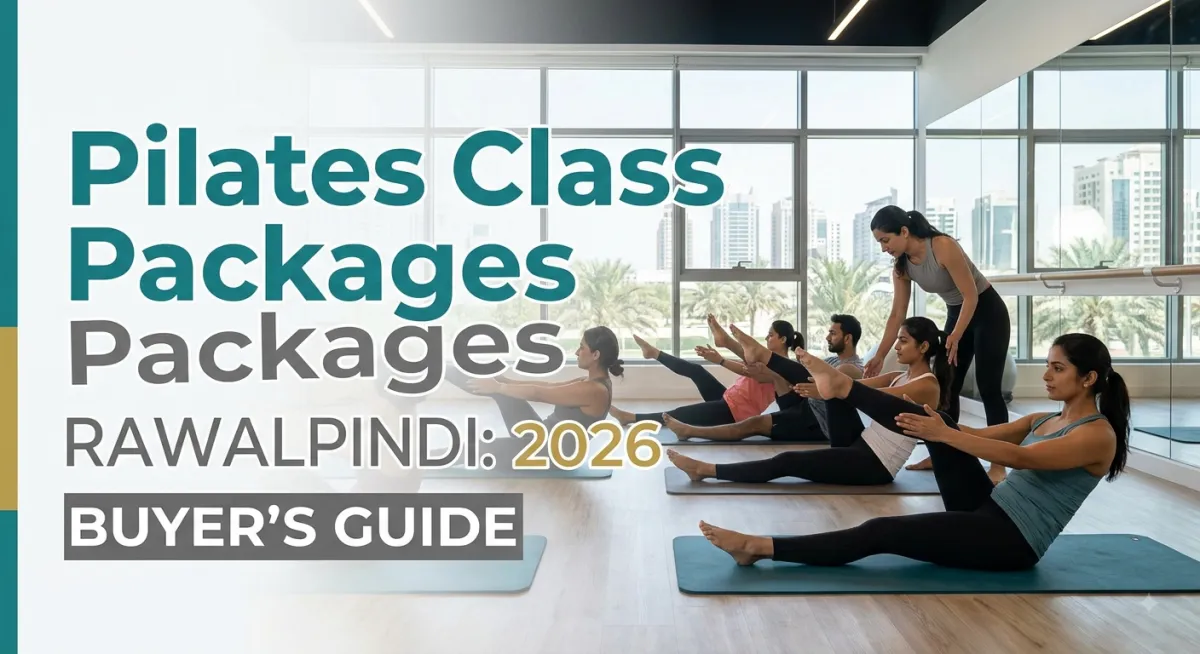
Rawalpindi's Top Pilates Studio | Free Trial – WCZ
If you've typed "best pilates studio Rawalpindi" into Google, you're probably past the point of wondering whether Pilates works. You already know it does, or you've heard enough from friends, physios, or Instagram to be curious. What you actually need is simpler and harder at the same time: which studio in Rawalpindi is worth your time, your money, and your first nervous session on a mat you've never touched before.
This isn't a list of five studios with star ratings copied off Google Maps. It's a practical look at what separates a studio that gets you real results from one that just has nice lighting for photos.
Pilates Isn't New, But Rawalpindi's Version of It Is Still Catching Up
Pilates has been around since the 1920s, developed by Joseph Pilates as a rehabilitation method for injured dancers and soldiers. It's built on control, breath, and precise movement rather than brute effort. That's the opposite of what most gyms in Rawalpindi are set up for.
Walk into a typical local gym and you'll find treadmills, free weights, and machines. All useful, but none of it designed around alignment, core stability, or the slow, deliberate movement that fixes things like lower back pain or bad posture from sitting at a desk all day. Pilates fills that gap. It's not cardio, it's not weightlifting, and it's not yoga either, even though people lump the three together constantly.
Here's the honest state of things in 2026: dedicated Pilates studios are still rare in Rawalpindi. Most "Pilates classes" you'll come across are tacked onto a gym's regular schedule, taught by trainers who picked up the basics from a weekend certification. A proper studio, one with reformer equipment, a private space, and instructors who specialize in this and nothing else, isn't the norm here yet. That's exactly why it's worth being picky.
Mat Pilates vs. Reformer Pilates: Know the Difference Before You Book
A lot of people search "best Pilates studio Rawalpindi" without realizing there are two very different experiences hiding behind that one word.
Mat Pilates uses your bodyweight, the floor, and sometimes small props like resistance bands or a ball. It's where everyone should start. The classic exercises, things like the Hundred, the Roll-Up, and Single Leg Circles, build the core control that everything else depends on. Mat work exposes weaknesses fast. If your lower back tightens up during a Roll-Up, that's information, not failure.
Reformer Pilates uses a spring-loaded machine that adds resistance and support at the same time. It's more dynamic, often more intense, and genuinely different from anything you'd get in a standard gym session. Reformer work is great for building strength without loading the joints, which is exactly why it shows up so often in physiotherapy and post-injury recovery plans.
Neither one is "better." A good studio in Rawalpindi will actually assess where you're starting from and won't put a total beginner straight onto a reformer without mat foundations first. If a studio skips that step, that's a red flag, not a shortcut.
Who Actually Benefits Most From Pilates
Pilates gets marketed at everyone, but a few groups tend to see the clearest results:
Desk workers and people with sedentary jobs. Hours of sitting tighten the hip flexors and weaken the glutes and deep core muscles. Pilates targets exactly that combination.
People recovering from pregnancy. Core and pelvic floor work is central to Pilates, which is why so many postnatal programs are built around it.
Anyone dealing with chronic lower back pain that isn't from a structural injury. Pilates strengthens the stabilizing muscles around the spine.
Older adults who want something lower-impact than running or heavy lifting but that still builds real strength and balance.
Athletes and dancers using it as cross-training, which is actually closer to its original purpose than most people realize.
If your goal is purely to burn calories fast, Pilates alone won't be the most efficient tool. Pairing it with functional training or cardio gets you there faster. But for posture, core strength, flexibility, and injury prevention, it's hard to beat.
What Separates a Good Pilates Class From a Waste of Your Time
This is where most people get it wrong when choosing a studio. They judge based on the interior design or the price, not the things that actually determine whether you'll get results.
Class size matters more than people think. In a class of 20 or more, an instructor physically cannot correct everyone's form. Pilates is precision based. Without correction, you either don't get the benefit or you injure yourself doing the movement wrong, repeatedly, with confidence.
The instructor's actual training matters. Ask directly: is this person certified specifically in Pilates, or is this a general fitness trainer running a Pilates class because it's popular right now? The difference shows up fast once you're mid session and something doesn't feel right.
A dedicated space beats a shared one. A studio actually built for Pilates, with proper flooring, equipment, and quiet, feels completely different from a corner of a gym with a few mats thrown down between the squat rack and the water cooler.
A trial session should be available. Any studio confident in what it offers will let you try a class before committing to a package. If a place pushes you straight into a long term membership with no trial, that's worth questioning.
Progression should be structured, not random. You should be able to see a path, from foundational mat work toward more advanced formats, rather than the same difficulty level every week regardless of how you're improving.
Where Wellness Club Zone Fits Into This
We're based in Bahria Town Phase 7, Rawalpindi, and we built the studio around most of what's missing from the checklist above. Small class sizes, certified instructors, a private space that isn't shared with a general gym floor, and both Mat and Reformer Pilates under one roof, so you're not stuck choosing a studio that only offers one and hoping it's the right fit.
We also run Yoga and Functional Strength Training alongside Pilates, which matters more than it sounds like it should. A lot of people who start with Pilates end up wanting to add some yoga for flexibility and stress, or bring in functional training once their core is strong enough to handle it. Having that progression available in the same space, with instructors who already know your history, tends to work better than bouncing between studios every few months.
The studio is easy to reach from across Rawalpindi and Islamabad. DHA, the different Bahria Town phases, and Chaklala Scheme are all a short drive away. And if you're not sure Pilates is for you yet, a free trial session is the way to find out before committing to anything.
Mistakes That Slow People Down
A few patterns show up again and again with people newer to Pilates:
Rushing through the movements. Pilates rewards control, not speed. Moving fast through the Hundred or the Roll-Up defeats the purpose. You're supposed to feel the muscle working the entire time, not just at the start and end.
Holding your breath. Breath is built into the method, not an afterthought. Breathing shallow or holding it tightens everything up and makes the movements harder than they need to be.
Skipping mat foundations to jump straight onto the reformer. It feels like progress, but without the core control from mat work, reformer sessions often reinforce bad movement patterns instead of fixing them.
Expecting quick, dramatic results. Pilates is subtle. Most people notice better posture and less back tightness within a few weeks. Visible strength and tone changes take longer, usually 8 to 12 weeks of consistent practice, two to three times a week.
Comparing it to a gym workout. If you leave a Pilates class not sweating buckets, that doesn't mean it didn't work. The intensity is internal, small muscle groups working hard, even when the movement looks gentle from the outside.
The Bottom Line
There isn't one objectively "best" Pilates studio in Rawalpindi, but there's a clear checklist for finding the right one for you: small classes, genuinely certified instructors, a dedicated space, a trial option, and a real path of progression instead of the same session on repeat. Whichever studio you choose, judge it against that list rather than the marketing.
If you're in Rawalpindi or Islamabad and want to see how this looks in practice, Wellness Club Zone in Bahria Town Phase 7 runs a free trial class, Mat or Reformer, whichever fits where you're starting from.
FAQ
How many times a week should I do Pilates to see results? Two to three sessions a week is the sweet spot for most beginners. Once a week maintains what you have but won't build much new strength.
Is Pilates enough on its own, or do I need to add other workouts? For posture, core strength, and flexibility, Pilates alone gets you far. If fat loss or cardiovascular fitness is a bigger priority, pairing it with functional training or walking and cardio speeds things up.
Can I start Pilates with no fitness background at all? Yes, that's actually the ideal starting point. Mat Pilates is low impact and beginner friendly, and a good instructor will modify every exercise to your current level.
Is Reformer Pilates safe after a back or knee injury? Often yes, and it's frequently used in physiotherapy for exactly that reason, but only with an instructor who knows your injury history and adjusts accordingly. Always mention any injury before your first session.
How is Pilates different from yoga? Yoga blends physical postures with breath and mindfulness, with flexibility and mental calm as central goals. Pilates focuses more on core strength, spinal alignment, and controlled, muscle specific movement. Many people end up doing both because they complement each other rather than compete.


